
From Meme to Movement: The Rise of the Cockroach Janta Party
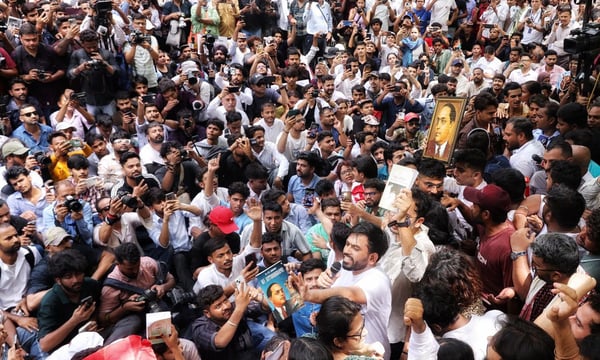
Indian politics has always had a flair for the dramatic, but rarely has a satirical internet joke evolved into a genuine political flashpoint quite so quickly. The so-called Cockroach Janta Party — born in the irreverent corners of Indian social media — crossed a significant threshold on June 6, when a crowd of mostly young protesters assembled at Delhi's iconic Jantar Mantar to give the movement its first tangible, on-the-ground presence. What many dismissed as a passing meme now carries the unmistakable weight of organized dissent, and observers across the political spectrum are beginning to ask the same question: is the Modi government genuinely worried about a Gen Z revolt?
What Is the Cockroach Janta Party?
To understand the movement's significance, it helps to understand its name. The "cockroach" label is a deliberate act of reclamation. When critics of the ruling establishment began using the insult — implying that ordinary, powerless citizens were little more than pests to be exterminated — young Indians online flipped the script entirely. Rather than recoiling from the slur, they embraced it, building an identity around the idea of resilience, persistence, and the stubborn refusal to be crushed.
The Cockroach Janta Party is not a registered political party in any formal sense. It operates more as a decentralized social and political identity — a banner under which India's digitally native youth can express frustration with unemployment, rising prices, governance failures, and what they perceive as the systematic dismissal of their concerns by a political class too comfortable in its own dominance. The name carries irony and humor, but the grievances underneath it are anything but funny to those who hold them.
The Jantar Mantar Protest: A Line in the Sand
Jantar Mantar has long served as Delhi's designated space for dissent. Unions, farmers, activists, and opposition groups have all used its wide avenues to make their voices heard. The decision by Cockroach Janta Party supporters to bring their movement here on June 6 was therefore symbolically loaded. It was a statement that this was no longer simply a Twitter or Instagram phenomenon — it was a real political constituency demanding to be taken seriously.
Attendees at the protest were notably young. Many described themselves as first-time demonstrators, people who had previously confined their political commentary to memes, threads, and reels. The event drew attention not just because of its size, but because of what it represented: a generation that grew up entirely under the digital communication revolution choosing to step offline and into the streets.
The demands raised at Jantar Mantar touched on themes that resonate deeply with young Indians — the alarming youth unemployment rate, the perceived erosion of institutional independence, the cost of living crisis, and a broader sense that the political system is unresponsive to the needs of those entering adulthood in the 2020s.
Why the Modi Government Has Reason to Pay Attention
The Bharatiya Janata Party (BJP) and Prime Minister Narendra Modi have, until recently, maintained a relatively strong grip on the youth vote. The PM's social media savvy, the government's use of nationalist messaging, and various flagship schemes targeted at young voters helped consolidate this support base across multiple electoral cycles. The emergence of a distinctly Gen Z opposition movement — one that speaks in the language of memes rather than manifestos — represents a novel and somewhat unpredictable challenge to that calculus.
Political analysts point to several reasons why the government might be wary of this development:
- Scale of digital reach: Content associated with the Cockroach Janta Party has circulated widely across platforms like Instagram, X (formerly Twitter), and YouTube. The organic, peer-to-peer nature of this spread makes it difficult to counter through conventional political messaging.
- Economic anxiety: India's youth unemployment remains a persistent structural problem. When young graduates struggle to find work commensurate with their qualifications, that frustration needs somewhere to go. The Cockroach Janta Party provides a ready-made identity for that discontent.
- Electoral timing: With state elections on the horizon and the next general election cycle not far in the distance, any sustained shift in the mood of young voters carries long-term implications for party strategists.
- Unpredictability of meme politics: Traditional political machinery is well-equipped to respond to organized opposition parties. It is far less prepared to engage with a movement whose primary weapons are humor, absurdism, and viral content — tools that can move faster than any press release or counter-campaign.
The Broader Context: India's Young Democracy and Its Discontents
India is one of the youngest countries in the world by median age, with hundreds of millions of citizens under 30. For decades, political parties of all stripes have spoken about harnessing the "demographic dividend" — the economic and social potential of this vast young population. In practice, however, many young Indians feel that rhetoric has consistently outpaced reality.
The Cockroach Janta Party taps into something deeper than any single policy grievance. It reflects a generation that has grown up watching political discourse online, that is fluent in the language of satire and critique, and that is increasingly skeptical of the traditional gatekeepers of political legitimacy. This is not a movement driven by a charismatic leader or funded by an established opposition donor network. It is, at least for now, something more organic and therefore harder to co-opt or neutralize.
What Comes Next?
Whether the Cockroach Janta Party sustains its momentum or fades back into the feeds remains to be seen. Movements that begin online often struggle to build the organizational infrastructure necessary for lasting political impact. The protest at Jantar Mantar was a significant moment, but a single demonstration does not a revolution make.
What it does suggest, however, is that India's political landscape is shifting in ways that established parties may not fully understand yet. A generation fluent in digital culture, united by economic frustration, and emboldened by the knowledge that a meme can reach millions more people than a pamphlet — that is a force worth watching. For the Modi government, the emergence of the Cockroach Janta Party is at minimum a signal worth heeding: India's young voters are no longer content to be silent, and they have found a voice, however unconventional, that resonates far beyond the screen.