
Apple's Surprising Siri U-Turn: What Craig Federighi Said
At WWDC 2026, Apple unveiled one of its more surprising announcements in recent memory — a dedicated, standalone Siri app arriving with iOS 27. The move raised immediate eyebrows across the tech community, largely because Apple's own senior leadership had, just a year earlier, publicly dismissed the concept of a bolt-on chatbot as something fundamentally at odds with Apple's vision for AI. So what changed? Apple's senior vice president of software engineering, Craig Federighi, stepped forward to explain the apparent about-face, and his reasoning reveals a great deal about how Apple thinks about integrating artificial intelligence into everyday user experiences.
What Is the New Siri App in iOS 27?
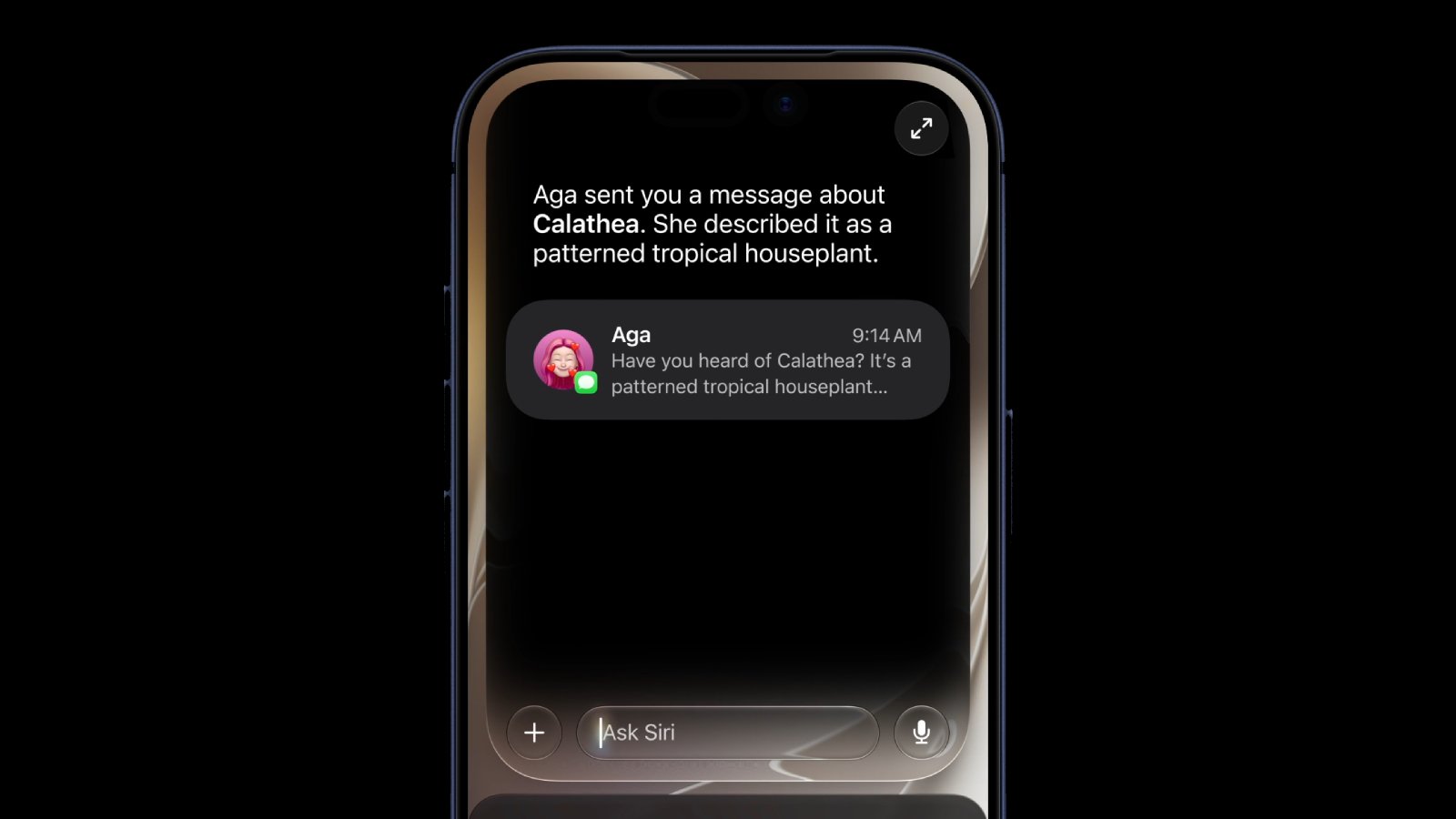
The new Siri app introduced in iOS 27 gives users a centralized, persistent space to manage and revisit their conversations with Siri AI. Rather than interactions vanishing the moment a user dismisses the assistant, the app creates a conversational history — a place where previous exchanges can be referenced, continued, and built upon over time.
This marks a meaningful evolution in how Siri functions on Apple devices. Previously, Siri interactions were largely ephemeral: ask a question, get an answer, move on. There was no thread, no continuity, no way to pick up where you left off. The new app changes that dynamic entirely, bringing Siri's conversational capabilities closer in line with what users have come to expect from modern AI assistants like ChatGPT and Google Gemini.
Announced at Apple's Worldwide Developers Conference earlier this week, the app sits on the home screen and acts as both a launch point and a logbook for Siri interactions, deeply embedded in the broader Apple Intelligence ecosystem.
Apple's Previous Stance: "No Bolt-On Chatbot"
To understand why this announcement feels significant, it helps to revisit what Apple was saying just twelve months ago. Following WWDC 2025, Federighi and Greg Joswiak — Apple's senior vice president of worldwide marketing — conducted a media tour in which they were notably direct about Apple's AI philosophy. Their message was clear: Apple's approach to AI was about weaving Siri into the user's existing workflows, not offering what Federighi described as "a bolt-on chatbot on the side."
That framing was deliberate. It positioned Apple as taking a more thoughtful, integrated approach compared to rivals who had rushed standalone chat interfaces to market. Apple's intelligence features, the executives argued, should feel native and contextual — embedded in Mail, Messages, Photos, and across the operating system — rather than siloed in a separate app that users had to consciously open and engage with.
Given that messaging, the arrival of a home screen Siri app in iOS 27 naturally prompted questions. During a post-keynote media discussion held at Apple Park this week, Federighi addressed those questions head-on.
Federighi's Explanation: It's About Continuity, Not Contradiction
According to Federighi, the decision to build a standalone Siri app came down to a practical, user-centric need: people want to return to their previous conversations and continue them. That's a behavior pattern that doesn't map neatly onto the existing OS-level affordances for Siri, and Apple concluded that a home screen app was simply the most natural solution available within its own platform.
Crucially, Federighi reframed the app not as a retreat from Apple's integrated AI vision, but as an extension of it. In his telling, Siri remains an "integral, conversational tool" — one that users interact with across the system — and the app is simply a dedicated surface for managing that ongoing relationship. It's less a separate chatbot and more a persistent conversation hub that complements Siri's system-wide presence.
The distinction Federighi drew is subtle but important. Apple is not positioning the Siri app as a replacement for contextual, in-app AI assistance. Instead, it exists alongside those experiences — a place to continue threads that started in Mail, pick up a research task left unfinished, or revisit a long conversation without having to reconstruct context from scratch.
Why This Shift Matters for Apple Intelligence
Apple Intelligence, Apple's broader framework for on-device and cloud-based AI features, has been steadily evolving since its introduction. Features like Writing Tools, Image Playground, and the upgraded Siri have been rolled out incrementally, and iOS 27 represents a significant step forward in the platform's maturity.
The addition of a dedicated Siri app signals that Apple is paying close attention to how users actually behave with AI assistants — not just how the company imagined they would. The demand for conversational continuity is real, and ignoring it in the name of philosophical consistency would have been a costly mistake as competition in the AI assistant space intensifies.
Apple vs. the Competition: Catching Up or Standing Apart?
It's worth acknowledging the competitive backdrop here. ChatGPT, Google Gemini, and Microsoft Copilot all offer persistent conversation interfaces as a core feature. Apple's prior insistence on not following that model was either a principled design choice or a gap that needed closing — possibly both. With iOS 27, Apple appears to be threading that needle, adopting a feature users clearly want while framing it in language that preserves the company's distinct AI identity.
What to Expect When iOS 27 Arrives
iOS 27 is currently in developer beta, with a public release expected later this year. The new Siri app will be available to all compatible devices supporting Apple Intelligence. Users can expect the app to surface on the home screen as a first-party application, providing a searchable and scrollable history of Siri conversations tied to their Apple ID.
Whether the Siri app ultimately changes how people relate to Apple's assistant remains to be seen. But Federighi's explanation makes one thing clear: Apple is willing to revise its public positions when real-world user behavior demands it — and that kind of pragmatism may be exactly what Apple Intelligence needs to compete in an increasingly crowded AI landscape.