
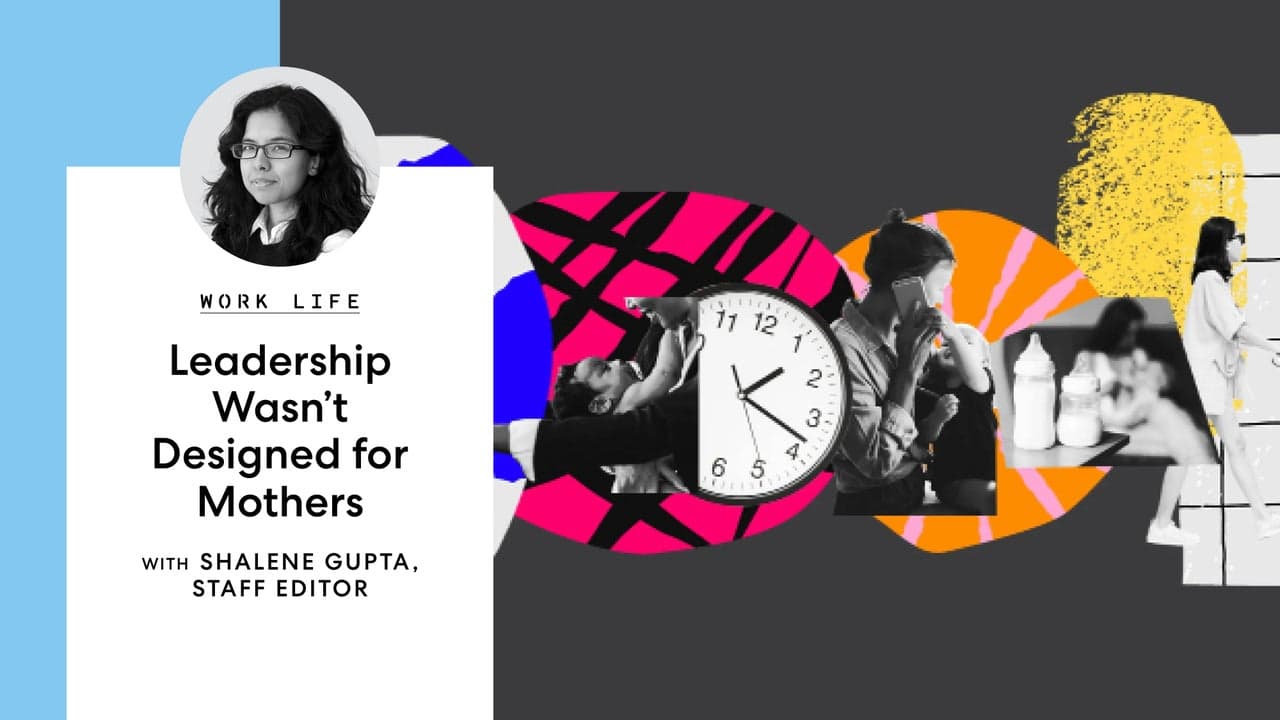
The System Was Never Designed With Mothers in Mind
Across boardrooms, open-plan offices, and Zoom calls, a quiet crisis is unfolding. More than 100 working mothers recently came forward to share their experiences inside corporate America — and the picture they paint is one of a system fundamentally broken for anyone who also happens to be raising a child. From impossible schedules to inadequate parental leave policies, their stories aren't outliers. They are the norm. And it's time corporate America listened.
The modern workplace was largely architected around a model that assumed workers had someone else handling the home front. Decades later, despite women making up nearly half the workforce and outpacing men in educational attainment, that foundational assumption hasn't changed nearly enough. Mothers are expected to perform at the same level as their childless peers while simultaneously managing school pickups, sick days, pediatric appointments, and the invisible mental load that never clocks out.
What Working Mothers Are Actually Experiencing
When over a hundred working moms were given the space to speak honestly, several overwhelming themes emerged. These weren't isolated complaints from a disgruntled few — they were consistent, painful patterns repeated across industries, income levels, and job titles.
The Penalty for Simply Being a Mother
Research has long documented what economists call the "motherhood penalty" — the measurable drop in earnings and perceived competence that women experience after having children. What these mothers described goes beyond statistics. Many shared stories of being passed over for promotions shortly after returning from maternity leave, being subtly sidelined from high-visibility projects, or finding that their ambitions were suddenly questioned in ways they never were before becoming parents.
One recurring theme was the assumption that a mother is no longer fully committed to her career. Requests for flexible scheduling — the kind routinely granted to employees for other personal reasons — were met with skepticism or denied outright. The message, often unspoken but unmistakable, was clear: choosing to have children is a professional liability.
Maternity Leave That Leaves You Behind
The United States remains one of the only developed nations without federally mandated paid maternity leave. While some corporations have stepped up with competitive leave packages, many working mothers reported returning to the office to find their roles diminished, their responsibilities redistributed, and their absence held against them in subtle but consequential ways.
Several mothers described the impossible math of early parenthood: daycare costs that rivaled their monthly mortgage payments, leave policies that were technically generous but culturally discouraged, and managers who viewed any time away from the office as a lack of dedication. For many, the financial and emotional calculation became brutally simple — was staying in the workforce even worth it?
The Mental Load No One Accounts For
Perhaps the most invisible burden working mothers carry is the cognitive weight of managing an entire household while maintaining a professional identity. This mental load — tracking appointments, managing childcare logistics, anticipating needs, coordinating schedules — is disproportionately carried by mothers even in dual-income households. It doesn't pause during the workday, and it doesn't register on any performance review.
Mothers described feeling perpetually split: physically present in a meeting while mentally calculating whether they'd remembered to sign a field trip form or arrange after-school coverage. This chronic state of divided attention has real consequences for focus, creativity, and long-term career trajectory — none of which corporate policies are designed to accommodate.
Why This Is a Systemic Problem, Not a Personal Failing
It's tempting to frame the struggles of working mothers as individual challenges to be solved through better time management or personal resilience. That framing is not only inaccurate — it's harmful. When more than a hundred women independently describe the same patterns of exclusion, bias, and structural neglect, the problem is clearly not with the mothers. The problem is with the system they're navigating.
Corporate cultures that reward presenteeism over productivity, that equate long hours with dedication, and that treat caregiving as a private inconvenience rather than a social necessity are not accidental. They are the product of decades of policy and cultural norms built around a workforce that was never expected to also raise the next generation.
What Real Change Would Actually Look Like
The good news is that the solutions are neither mysterious nor impossible. Companies that have genuinely invested in supporting working mothers consistently report higher retention rates, stronger employee morale, and better overall performance. The business case for change is as compelling as the moral one.
- Flexible work arrangements that are genuinely accessible and culturally normalized — not just listed in an employee handbook nobody reads.
- Paid parental leave policies that are generous, clearly communicated, and free of the unspoken penalties that currently discourage mothers from taking the full time they're entitled to.
- Affordable, employer-supported childcare options that acknowledge the reality that quality childcare is, for many families, the single biggest barrier to full workforce participation.
- Bias training and promotion audits that specifically examine whether mothers are being passed over at disproportionate rates — and hold managers accountable when they are.
- Leadership representation that includes mothers in senior roles, signaling to younger employees that ambition and parenthood are not mutually exclusive.
The Cost of Doing Nothing
Every time a talented, experienced woman leaves the workforce — or quietly scales back her ambitions — because the system failed to support her, corporations lose far more than they realize. They lose institutional knowledge, diverse leadership, and the irreplaceable value of employees who have, by necessity, become experts in efficiency, multitasking, and empathy under pressure.
The stories shared by these more than 100 working mothers are a warning. Corporate America has a choice: evolve to genuinely support the mothers already in its ranks, or continue losing them to burnout, resentment, and better opportunities with employers who understand that a workforce that works for mothers ultimately works better for everyone.
The system is broken. But broken systems can be rebuilt — if the will to do so finally matches the scale of the problem.