
How to Choose the Right Grill for You
Few purchases spark as much excitement — and confusion — as buying a new grill. Walk into any hardware store or scroll through any retailer's website and you'll find dozens of options staring back at you, each promising to be the secret to your best backyard barbecue ever. Gas or charcoal? Pellet or electric? Kettle or kamado? The choices are genuinely overwhelming, especially if you're a first-time buyer.
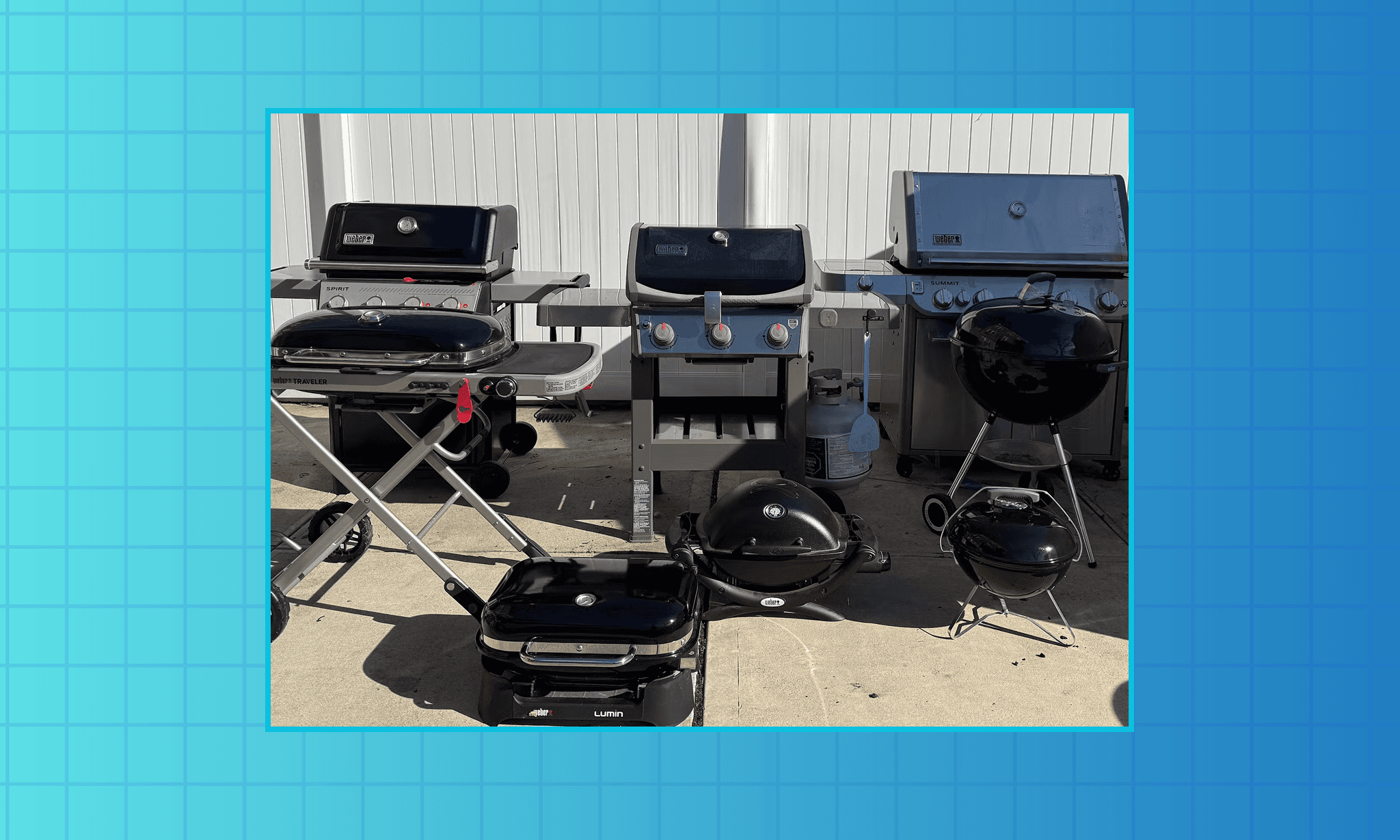
That's exactly why we turned to our in-house grill expert, who has personally tested more than 50 grills across every major category, price point, and fuel type. The result is this comprehensive buying guide, designed to cut through the marketing noise and help you find the grill that truly fits your lifestyle, cooking habits, and budget. Let's get into it.
Step 1: Know How You Actually Cook
Before you even look at a single model, the most important question you can ask yourself is a simple one: how do you actually cook outdoors? Are you someone who wants to throw burgers on a Saturday afternoon with minimal fuss? Or are you the type who spends weekends slow-smoking brisket for twelve hours while monitoring internal temperatures to the degree? Your honest answer to that question will do more to narrow your choices than any spec sheet ever could.
Casual weekend grillers who prioritize convenience tend to be happiest with a reliable gas grill. Flavor chasers and purists often swear by charcoal. Outdoor chefs who want the best of both worlds — low-and-slow smoking capability plus high-heat searing — should seriously consider a pellet grill or a kamado-style ceramic grill.
Step 2: Understand the Main Grill Types
Gas Grills
Gas grills are the most popular choice in North America for good reason. They heat up quickly, offer precise temperature control, and require very little cleanup compared to charcoal. They run on either propane tanks or natural gas (if your home has a gas line connection), and they come in a huge range of sizes and price points — from compact two-burner models to massive six-burner setups with side burners, rotisseries, and built-in smoker boxes.
If ease of use is your top priority and you grill frequently during the week, a gas grill is almost certainly your best bet. Our expert consistently found that mid-range gas grills in the $400–$800 range offered the best balance of performance, durability, and value.
Charcoal Grills
There's a reason charcoal grilling has endured for generations: nothing else quite replicates the smoky, deeply caramelized flavor it produces. Charcoal grills reach higher temperatures than most gas models, which means better searing and that coveted steakhouse-quality crust. The trade-off is time — you'll need 20 to 30 minutes to get your coals ready — and cleanup takes more effort.
Kettle grills are the classic charcoal option and remain one of the best-value purchases in the outdoor cooking world. They're versatile enough to grill, smoke, and even bake. For beginners, a 22-inch kettle grill is an ideal and affordable starting point.
Pellet Grills
Pellet grills have exploded in popularity over the past decade, and after testing a wide range of models, our expert understands why. These grills use compressed wood pellets as fuel, feeding them automatically into a fire pot via an auger system controlled by a digital thermostat. The result is exceptionally consistent, set-it-and-forget-it cooking with genuine wood-smoke flavor.
They excel at low-and-slow smoking — ribs, brisket, pulled pork — but higher-end models now offer excellent high-heat grilling capability as well. The main downside is cost: quality pellet grills typically start around $500 and can climb well above $1,500 for premium brands.
Kamado Grills
Kamado grills, made from thick ceramic, are the most versatile cookers on this list. They can grill, smoke, sear at extremely high temperatures, and even function as an outdoor oven for baking pizza and bread. Because the ceramic retains heat so efficiently, they use fuel more economically than any other charcoal option. They are, however, heavy, expensive, and less portable than other grill types. If you're a serious outdoor cook looking for a lifetime investment, a kamado is hard to beat.
Step 3: Consider Your Space and Portability Needs
Your physical cooking environment matters enormously. Apartment dwellers with a small balcony have completely different needs than homeowners with a sprawling backyard patio. Measure your available space carefully before purchasing, and factor in whether you need a portable option for camping or tailgating. Compact tabletop gas and charcoal grills are excellent for small spaces and travel, while built-in or freestanding full-size models are best suited to permanent outdoor kitchens.
Step 4: Set a Realistic Budget
You don't need to spend a fortune to get a great grill, but buying the cheapest option often leads to disappointment. Thin steel grates warp, flimsy burners corrode, and cheap ignition systems fail after one season. Our expert recommends setting a minimum budget of $200 for a quality entry-level grill, and spending more if you plan to grill regularly. Think of a well-made grill as a ten-year investment rather than a seasonal purchase.
Step 5: Don't Overlook Build Quality and Warranty
Look for heavy-gauge steel construction, porcelain-coated or cast-iron grates, and a warranty of at least two years on the burners and body. Read real user reviews beyond the manufacturer's website, and if possible, see the grill in person before buying. A solid grill should feel substantial — not flimsy — and the lid should open and close smoothly with a satisfying seal.
The Bottom Line
Choosing the right grill comes down to matching the tool to your lifestyle. Gas grills win on convenience, charcoal wins on flavor and value, pellet grills win on versatility and consistency, and kamados win on all-around performance for the dedicated outdoor cook. There is no single "best" grill — only the best grill for you. Take your time, do your research, and when in doubt, trust the advice of someone who has actually fired up more than 50 of them.