
Why Your Garbage Disposal Deserves More Respect
The garbage disposal is one of the most hardworking appliances in your kitchen, yet it's also one of the most misunderstood. Most homeowners treat it like a catch-all for every scrap of food that misses the trash bin — but experts warn that this habit is quietly destroying the appliance from the inside out. Learning what belongs in your disposal (and what absolutely does not) can save you hundreds of dollars in plumbing repairs and help your unit last for years to come.
According to plumbing professionals and kitchen appliance experts, the damage is rarely caused by one dramatic mistake. More often, it's the slow accumulation of everyday kitchen waste that leads to clogs, corrosion, foul odors, and burned-out motors. The good news? A few simple habit changes can make all the difference.
The Worst Offenders: Foods That Ruin Your Disposal
Not all food scraps are created equal. While your disposal can handle soft, water-soluble waste without issue, a surprising number of common kitchen items pose a serious threat to its blades, motor, and drain pipes.
Grease, Fats, and Cooking Oils
Pouring leftover bacon grease or cooking oil down the drain feels harmless in the moment, but it's one of the most damaging things you can do to your garbage disposal and plumbing system. When hot grease enters the drain, it flows easily — but as it cools, it solidifies and coats the inside of your pipes. Over time, this buildup narrows the pipe opening, eventually causing stubborn blockages that are both difficult and expensive to clear. Instead, allow grease to cool and solidify in a container, then dispose of it in the trash.
Coffee Grounds
Coffee grounds might seem small and harmless, but they're actually one of the most common culprits behind garbage disposal clogs. Rather than flushing cleanly through the drain, grounds accumulate and clump together, forming a dense, paste-like sludge inside your pipes. Experts consistently advise composting coffee grounds or throwing them in the trash rather than sending them down the disposal.
Eggshells
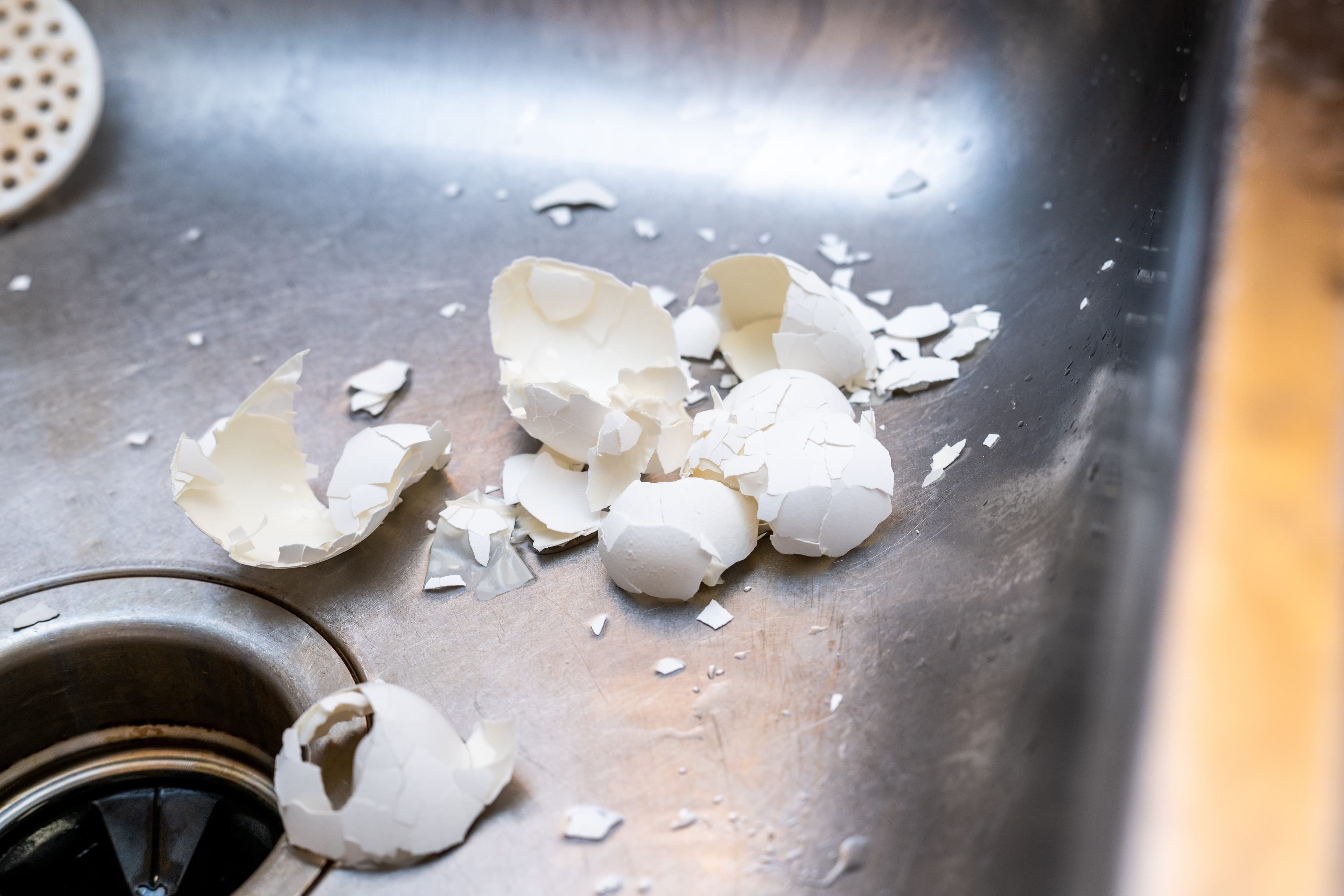
There's a popular myth that eggshells help sharpen disposal blades. This is false. Garbage disposals don't have blades in the traditional sense — they use impellers to grind food. Eggshells create fine, sand-like granules that cling to the inside of pipes and contribute to buildup over time. The thin membrane lining the inside of eggshells can also wrap around the disposal's moving parts and cause mechanical issues.
Pasta, Rice, and Starchy Foods
Starchy foods like pasta, rice, oatmeal, and bread continue to expand when they come into contact with water. Even after they've been ground up by your disposal, these particles keep absorbing moisture inside your pipes and can swell into a thick, gummy clog. This is especially problematic in the curved sections of drain pipes where water flow slows down. These types of scraps are far better suited for the compost bin or trash.
Fibrous Vegetables
Celery stalks, artichokes, asparagus, corn husks, and onion skins all contain long, stringy fibers that can tangle around the disposal's impellers and motor shaft. Once wrapped tightly enough, these fibers can jam the unit entirely and cause the motor to overheat or burn out. Even smaller amounts of fibrous material can build up gradually and reduce the disposal's efficiency over time.
Fruit Pits and Hard Seeds
Cherry pits, peach pits, avocado seeds, and similar hard items should never go near your disposal. These objects are far too hard and dense for the appliance to handle, and attempting to grind them can chip or dull the impellers, damage the motor, and cause loud, alarming grinding noises. When in doubt, if you couldn't crush it easily with your hand, it doesn't belong in the disposal.
Potato Peels
Potato peels are starchy and thin, which makes them especially troublesome. They can slip past the grinding mechanism in sheets and accumulate in the drain below, where they form a thick, sticky paste. This is one of the most frequent causes of disposal-related plumbing calls, according to plumbers — and one of the easiest problems to prevent by simply peeling potatoes over a trash bin.
Non-Food Items That Cause Serious Damage
Food isn't the only threat. Many homeowners accidentally allow non-food items to fall into the disposal, and the results can be costly. Items like twist ties, rubber bands, pull tabs, broken glass, bottle caps, and small utensils should be kept well away from the drain opening. Even a single metal object can chip an impeller or jam the unit immediately.
Harsh chemical drain cleaners are another hidden danger. While they might seem like an easy fix for a slow drain, chemical cleaners can corrode the rubber seals and metal components inside your disposal, shortening its lifespan significantly. Opt instead for natural cleaning methods like flushing the disposal with cold water while running it, or periodically dropping in a few ice cubes and coarse salt to clean the grinding chamber.
Simple Habits That Keep Your Disposal Running Strong
- Always run cold water before, during, and for at least 30 seconds after using your disposal. Cold water keeps fats solid so they can be ground up and flushed away rather than coating your pipes.
- Feed food scraps gradually rather than dumping everything in at once. Overloading the disposal is a quick way to jam it.
- Cut large scraps into smaller pieces before placing them in the drain to reduce strain on the motor.
- Clean your disposal regularly by grinding a handful of ice cubes with a sprinkle of baking soda, followed by a flush of cold water and a few drops of dish soap.
- Keep a small strainer over the drain opening to catch accidental items before they fall in.
When to Call a Professional
If your disposal is making unusual noises, running but not grinding, emitting persistent odors even after cleaning, or leaking water beneath the sink, it's time to call a licensed plumber. Attempting to repair a jammed or damaged disposal without proper knowledge can be dangerous and may void any remaining warranty on the unit.
Routine awareness is your best tool. Knowing what your garbage disposal can and cannot handle is a simple form of home maintenance that costs nothing but pays off significantly in the long run. Treat it with a little more care, and it will serve your kitchen reliably for years ahead.