
Home Prices Are Falling in Dozens of Major U.S. Markets — Here's What You Need to Know
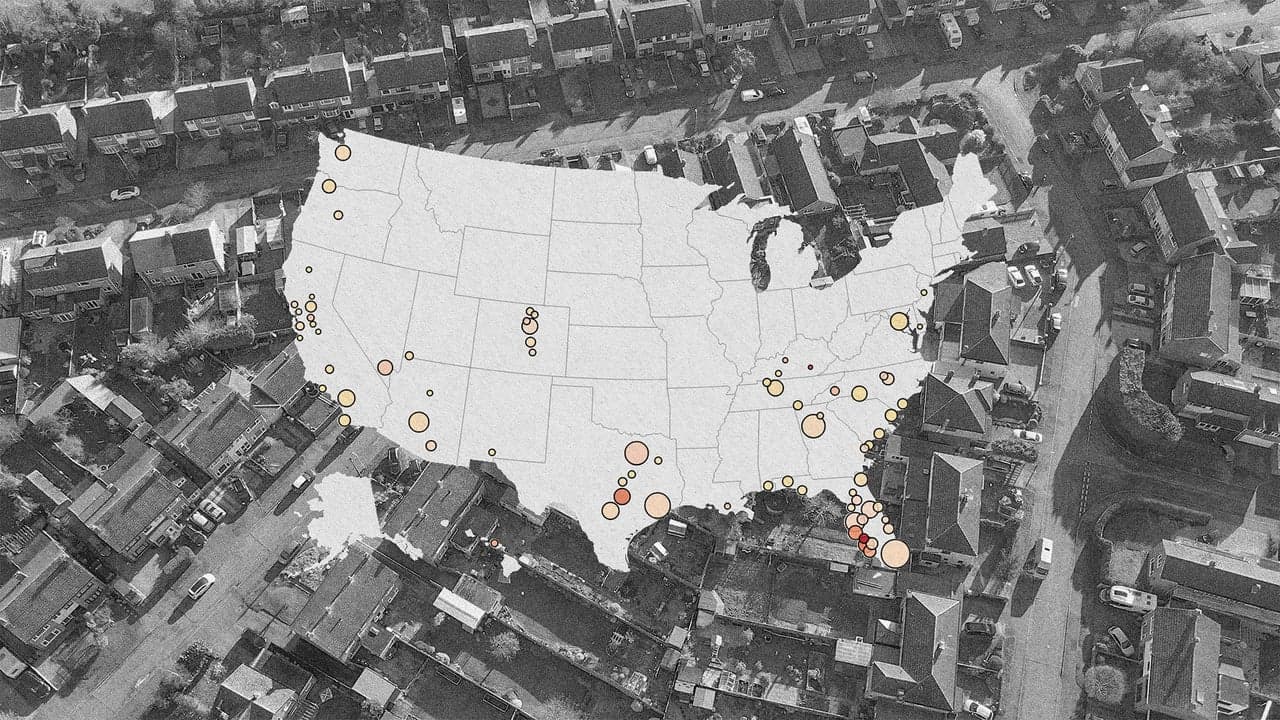
The U.S. housing market continues to send mixed signals in 2025. While national home prices are technically still rising, a closer look at the data reveals a deeply uneven landscape — one where buyers in some cities are finally gaining the upper hand while sellers in others are still holding firm. According to an analysis of the Zillow Home Value Index, approximately 77 of the nation's 300 largest housing markets are experiencing year-over-year home price declines, a figure that has climbed sharply over the past year before recently stabilizing.
If you're a homebuyer, seller, or real estate investor, understanding which markets are softening — and why — could make a significant difference in the decisions you make this year.
The National Picture: Modest Growth, But Uneven Results
At the national level, U.S. home prices — including both single-family homes and condos — rose 0.8% between May 2025 and May 2026, according to the Zillow Home Value Index. That pace is roughly in line with where the market stood a year earlier, when the national year-over-year growth rate was 0.4%. It also marks a recovery from the recent year-over-year low of -0.01% recorded in August 2025, when the market briefly dipped into negative territory on a national basis.
So on paper, home prices in the United States are still going up — just barely, and not everywhere. The aggregate numbers mask significant divergence at the metro level, which is where the real story lies.
How the Number of Declining Markets Has Grown
One of the most telling trends in recent months has been the rapid increase in the share of major metro housing markets recording year-over-year price declines. The progression has been striking:
- In the January 2024 to January 2025 window, just 31 of the nation's 300 largest housing markets — about 10% — had a falling year-over-year reading.
- By the February 2024 to February 2025 window, that number climbed to 42 markets, representing 14% of the total.
- In the March 2024 to March 2025 window, the count jumped to 60 markets, or 20% of the 300 largest metros.
- The April 2024 to April 2025 window saw 80 markets — 27% — recording year-over-year declines.
- By the May 2024 to May 2025 window, the number had risen to 96 markets, or roughly 32% of all major housing markets.
The good news, if you can call it that, is that this upward trend in declining markets appears to have stalled and reversed slightly, with the most current data pointing to around 77 markets now seeing year-over-year price drops. That still represents a significant portion of the country's major metro areas, but the stabilization suggests the worst of the national correction may have passed.
Why Are Home Prices Falling in These Markets?
Several interconnected factors help explain why certain housing markets are experiencing price declines while others continue to appreciate.
Elevated Mortgage Rates
Mortgage rates have remained stubbornly high throughout 2024 and into 2025, significantly reducing affordability for prospective buyers. In markets where prices surged dramatically during the pandemic-era boom, high rates have made monthly payments unworkable for many buyers, forcing sellers to lower their asking prices to attract interest.
Inventory Buildup in Sun Belt and Pandemic Boomtowns
Many of the markets seeing the steepest price corrections are in Sun Belt states like Florida, Texas, and parts of the Mountain West — areas that saw explosive price growth between 2020 and 2022. New construction in these regions has added substantial inventory to the market, and with demand cooling due to affordability constraints, the balance has tipped in favor of buyers. Markets like Austin, Tampa, Jacksonville, and Cape Coral have seen meaningful price softening as a result.
Remote Work Reversal
Some markets that boomed specifically because of remote work migration have seen demand fade as employers increasingly require employees to return to the office. This has softened conditions in certain secondary cities that drew outsized interest during the height of the pandemic.
Which Types of Markets Are Holding Up Best?
Not all markets are softening. Metro areas in the Northeast and Midwest — places like Chicago, Cleveland, Hartford, and Providence — have shown relative price resilience. These markets tend to have tight existing inventory, less new construction, and historically more affordable price points that insulated them from the sharpest affordability pressures. Coastal California markets have also shown some stabilization after significant earlier corrections.
What This Means for Buyers and Sellers in 2025
For buyers, the expansion of markets with falling prices represents a genuine opportunity. In the 77 metros currently seeing year-over-year declines, negotiating power has shifted. Days on market are longer, price reductions are more common, and sellers are more willing to offer concessions on repairs, closing costs, and contingencies. If you've been priced out of a market over the past few years, now may be the most favorable entry point you've seen in some time.
For sellers in declining markets, the message is equally clear: pricing your home competitively from the outset matters more than ever. Overpriced listings are sitting longer, and chasing the market down with successive price cuts often leads to worse outcomes than pricing correctly from day one.
For investors, markets with falling prices can present opportunity — but also risk. Cash flow fundamentals and local job market strength should be the primary filters before committing capital in a softening environment.
The Bottom Line
The U.S. housing market in 2025 is a tale of two realities. Nationally, prices are still nudging higher. But in 77 of the country's 300 largest markets, year-over-year home values are declining — a number that climbed sharply through the first half of 2025 before appearing to stabilize. Whether you're buying, selling, or simply watching the market, keeping a close eye on local data rather than national headlines is the most important thing you can do. The housing market has always been local, and right now, that's truer than ever.