
Why Consumers Are Anxious About Money — But Still Opening Their Wallets This Summer
Summer 2026 has arrived with an unusual economic paradox at its center. Prices are up, economic uncertainty is high, and household budgets are under real pressure. Yet the majority of American consumers are not planning to dramatically slash their spending over the next three months. Understanding why requires stepping back from traditional economic models and looking more closely at how real households actually make decisions about money.
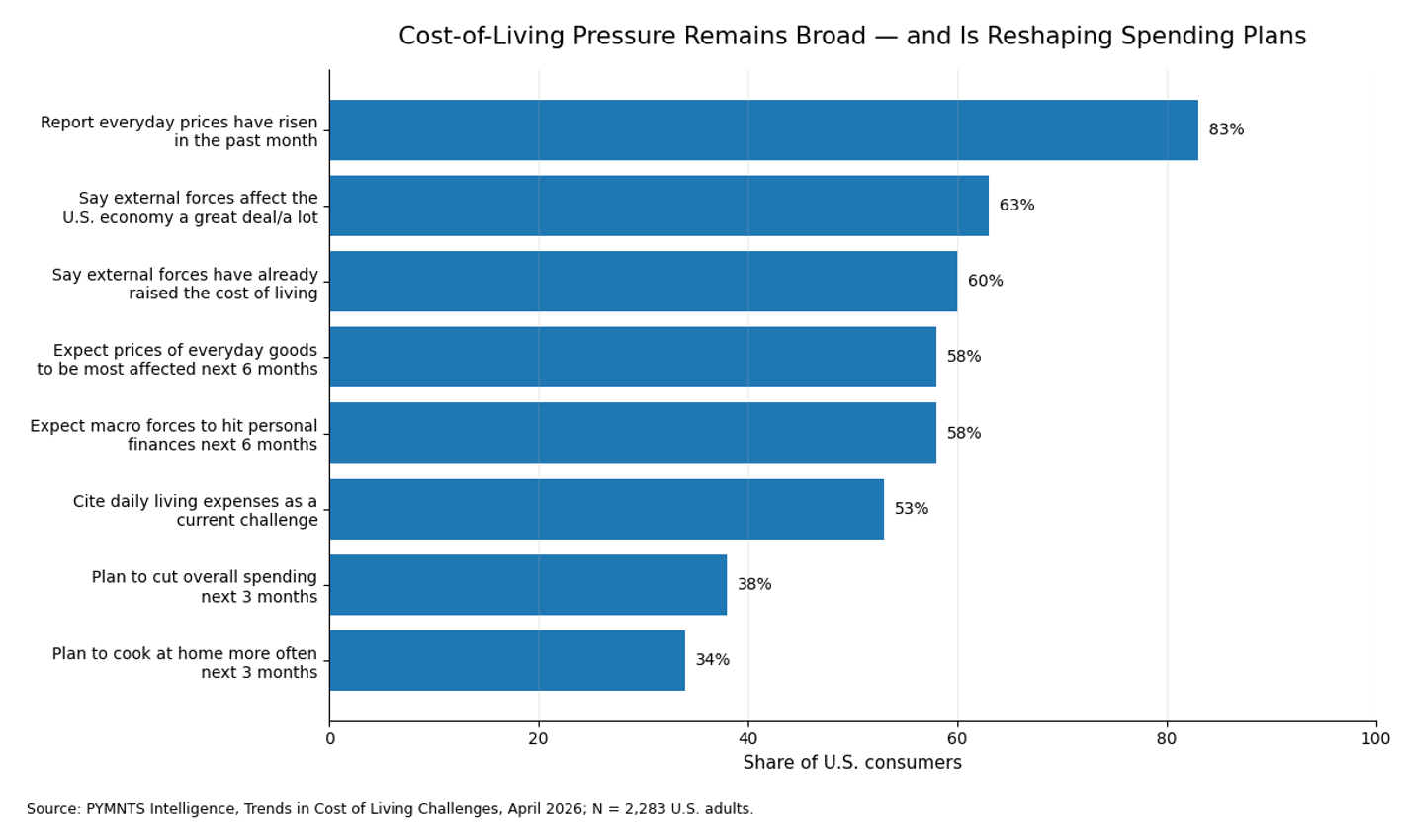
Research from PYMNTS Intelligence paints a revealing picture. A striking 83% of consumers report that everyday prices have increased. Nearly two-thirds say that external economic forces are affecting the U.S. economy significantly. And 58% expect those broader forces to have a direct impact on their personal finances within the next six months. Despite all of that, only 38% say they plan to reduce their spending in the near term.
At first glance, those numbers seem contradictory. But dig a little deeper, and a clear pattern begins to emerge — one that has major implications for businesses, retailers, financial institutions, and anyone trying to understand where consumer dollars will flow this summer.
The Real Reason Spending Holds Up Under Pressure
The traditional view of consumer behavior assumes that when economic anxiety rises, spending falls. Households feel the pinch, they cut discretionary expenses, and demand contracts accordingly. That model has guided retail forecasts, monetary policy, and business planning for decades.
But what the latest data suggests is something more nuanced: households are not cutting spending uniformly across categories. They are making highly personal, prioritized decisions about what stays and what goes — and those decisions do not always align with how economists or marketers define "essential" versus "discretionary."
As PYMNTS CEO Karen Webster has argued, "essential isn't a characteristic of the expense. It's the characteristic of the person spending the money on it." That insight reframes the entire conversation about consumer behavior. A gym membership might look like a luxury on a spreadsheet, but for the person paying it, it may represent mental health, community, and identity — things they will sacrifice other spending to preserve. A streaming subscription, a family vacation, a dinner out to celebrate a milestone: these are not frivolous to the people who choose them, even when budgets are tight.
What Households Are Actually Struggling With
The PYMNTS Cutback Economy research identifies where consumers are feeling the most pressure. Fifty-three percent of respondents cited daily living expenses — groceries, gas, utilities — as a current financial challenge. Forty-four percent pointed to broader economic forces, including inflation and interest rates, as ongoing concerns.
These are not abstract worries. They translate into real behavioral shifts at the margins: choosing store brands over name brands, delaying a car purchase, consolidating errands to save on fuel. But critically, they do not always translate into abandoning the spending that households value most.
This is where the "cutback economy" concept becomes particularly useful. It is not an economy where people stop spending. It is an economy where people spend more deliberately, protecting what matters most to them while trimming around the edges of everything else.
Summer Spending Categories to Watch in 2026
Given this framework, certain consumer spending categories are likely to prove more resilient than others this summer — not because they are objectively necessary, but because large numbers of households have decided they are personally non-negotiable.
- Travel and experiences: Post-pandemic, many consumers have reinforced the value they place on experiences over things. Family trips, weekend getaways, and concerts remain high on the priority list even for budget-conscious households. Expect experiential spending to hold relatively firm, though consumers may trade down in accommodation or dining choices rather than cancel plans entirely.
- Food and dining: Grocery prices remain a sore point, and many consumers have shifted cooking behavior at home. However, social dining — celebrating birthdays, meeting friends, date nights — retains strong emotional value and tends to survive budget cuts longer than other discretionary categories.
- Health and wellness: Spending on fitness, mental health services, and preventive care continues to be treated as essential by a growing segment of consumers, particularly millennials and Gen Z. This category has proven surprisingly durable in previous economic downturns.
- Children's activities: Parents frequently protect spending related to their children's enrichment, education, and summer activities, even when other household spending contracts. Summer camps, youth sports, and family entertainment tend to be among the last items cut.
What This Means for Businesses and Marketers
For businesses trying to anticipate summer demand, the key takeaway is that aggregate spending data can be misleading. Averages obscure the deeply individual nature of spending decisions in a cutback economy. A retailer whose core customer has decided their product or service is essential will see very different results from one whose offerings sit at the edge of customer priority lists.
This means that brand loyalty, emotional resonance, and perceived value matter more than ever. Consumers under financial pressure do not simply spend less — they become more selective and more attached to the brands and experiences that feel genuinely meaningful to them. Businesses that understand their place in that hierarchy will be far better positioned to navigate the rest of 2026.
The Bottom Line on Summer Consumer Spending
The contradiction at the heart of this summer's spending outlook is really not a contradiction at all. It is a reflection of how human beings actually manage money — not by following economic theory, but by protecting what they care about most and cutting what they can live without. Eighty-three percent of consumers may feel the squeeze of higher prices, but they are also making active, values-driven choices about where their dollars go.
For anyone trying to understand, forecast, or serve the American consumer this summer, the most important question is no longer simply "how much will people spend?" It is "what have people already decided they will not give up?" The answers to that question will shape retail performance, financial behavior, and economic outcomes well beyond the summer months.