
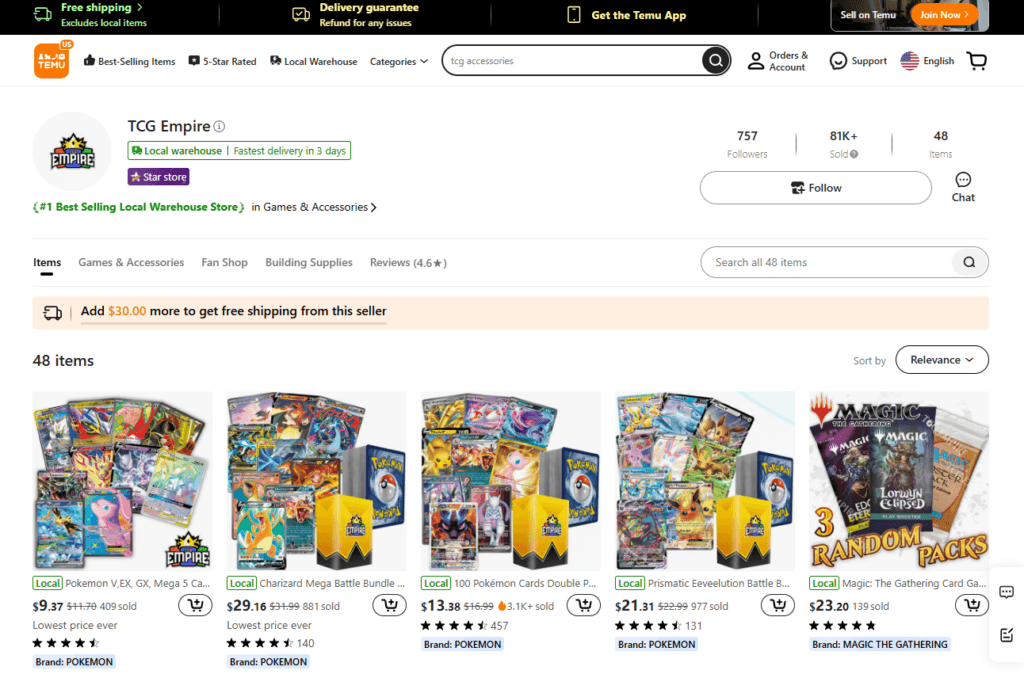
From Personal Collections to a Warehouse Operation: The TCG Empire Story
What starts as a hobby can sometimes evolve into something much bigger. For Joshua Howell, co-founder of TCG Empire, years of flipping trading cards on the side quietly laid the groundwork for a full-scale ecommerce business. Today, TCG Empire is not just a local card shop — it is a growing force on some of the internet's largest online marketplaces, including Temu, eBay, Amazon, and Walmart. To keep up with accelerating demand, the company has taken a major operational step: opening a dedicated warehouse.
What Is TCG Empire and How Did It Start?
TCG stands for Trading Card Game, and TCG Empire specializes in selling cards from some of the most popular franchises in the hobby market. Its catalog includes Pokémon, Magic: The Gathering, Yu-Gi-Oh!, and One Piece cards. However, according to founder Joshua Howell, Pokémon is by far the dominant product line, with the rest serving as supplementary offerings.
Howell launched TCG Empire in January 2024 after spending years working for another card company while simultaneously flipping trading cards as a side hustle for over 13 years. That combination of industry experience and personal passion gave him a strong foundation when he finally decided to go all in. By March 2024 — just two months after founding the business — TCG Empire had both a physical retail store and a functioning ecommerce website up and running.
The origin story is relatable to many collectors: the founders began by pooling their personal card collections and selling at local card shows. It is a grassroots beginning that resonates with the trading card community, and it gave the business an authentic foothold in a market driven by enthusiasts.
How Temu Became a Game-Changer for TCG Empire
While TCG Empire was present on multiple platforms from early on, Howell credits Temu as a significant catalyst for the company's growth. Speaking to Digital Commerce 360, he noted that Temu "definitely helped us accelerate what we're doing." The trajectory followed a clear pattern: slow initial growth, followed by steady progress once the team refined its operations, launched its own storefront, secured product distribution, and then expanded to Temu.
Temu, the fast-growing global marketplace owned by PDD Holdings, has attracted millions of shoppers with its competitive pricing and wide product range. For a trading card seller like TCG Empire, gaining visibility on such a high-traffic platform can translate directly into a significant volume boost. The marketplace model allows smaller or mid-sized sellers to reach audiences they would never be able to capture through a standalone website alone.
The surge in Temu orders was substantial enough that TCG Empire needed to rethink its logistics infrastructure — hence the decision to open a dedicated warehouse. Scaling fulfillment to meet marketplace demand is one of the most common growing pains for ecommerce sellers, and TCG Empire is navigating that transition in real time.
A Multi-Marketplace Ecommerce Strategy
Rather than betting everything on a single channel, TCG Empire has deliberately built a presence across several major platforms. Howell explained the logic clearly: it is simply easier to get your name in front of buyers when you are listed on platforms where those buyers are already shopping. The company actively sells on:
- TCGplayer — a niche marketplace dedicated entirely to trading card games, making it a natural and highly targeted channel for card sellers
- eBay — one of the oldest and most trusted platforms for collectibles, with a massive and loyal buyer base in the trading card community
- Amazon — the world's largest ecommerce platform, offering unrivaled reach for product discovery
- Walmart Marketplace — a growing ecommerce platform that connects third-party sellers with Walmart's substantial online customer base
- Temu — an increasingly influential marketplace known for value-driven shopping and rapid user growth
This diversified approach reduces dependency on any single channel and maximizes exposure across different buyer demographics. A collector browsing TCGplayer has very different habits from a casual shopper on Temu, and being present on both means TCG Empire can serve both audiences effectively.
The Role of the TCG Empire Website
Interestingly, TCG Empire's own ecommerce website plays a different role than one might expect. Rather than functioning as the primary sales channel, the site is used mainly for bulk sourcing. The company operates a submission form through which consumers can send in their bulk trading cards for purchase. TCG Empire then buys those cards, replenishing its inventory through the community itself — a smart circular model that keeps supply flowing.
Howell acknowledged that the website does not drive the majority of direct sales, and that the team has not focused heavily on building it out as a front-end retail destination. Given the sheer traffic volume on established marketplaces, this is a pragmatic decision that many ecommerce sellers face: the cost and effort required to drive organic traffic to a standalone site can be enormous compared to simply meeting customers where they already are.
What TCG Empire's Growth Says About the Trading Card Market
The trading card industry has experienced a remarkable resurgence in recent years, fueled in large part by nostalgia, social media, and the investment appeal of rare cards. Pokémon in particular has seen sustained demand from both collectors and speculators, making it one of the most resilient categories in the hobby market. TCG Empire's growth is a microcosm of broader trends in the industry.
The decision to open a warehouse reflects a critical inflection point for the business — one where informal operations are no longer sufficient to meet the demands of a marketplace-driven, high-volume sales model. It signals maturity, commitment, and confidence in sustained demand.
Key Takeaways for Ecommerce Sellers
TCG Empire's journey from card shows to warehouse operations offers several lessons for other small business owners and ecommerce entrepreneurs looking to scale:
- Start where the buyers are. Leveraging established marketplaces like Temu, eBay, Amazon, and Walmart gives new sellers instant access to large audiences without requiring massive marketing budgets.
- Diversify your channels. Relying on a single platform creates fragility. A multi-marketplace strategy spreads risk and maximizes reach.
- Use your website strategically. Not every ecommerce site needs to be the primary revenue driver. TCG Empire repurposed its site for bulk buying, turning it into a supply chain tool rather than just a storefront.
- Scale your operations in step with demand. Opening a warehouse is a significant investment, but failing to do so when volume demands it can lead to fulfillment breakdowns that damage customer trust and marketplace rankings.
- Passion and expertise matter. Thirteen years of hands-on experience in trading cards gave Howell the product knowledge and market intuition to build a credible business quickly.
TCG Empire's story is still being written, but the opening of its warehouse marks a clear milestone in its evolution from a passion project to a serious ecommerce operation. As marketplace competition intensifies and trading card demand shows no signs of cooling, it will be worth watching how TCG Empire continues to grow — and which platform drives the next chapter of its success.