
True Beauty Lashes Bets on LashLovr to Reestablish Its Ecommerce Foundation
What began as a side hustle has grown into a recognized beauty brand — but not without some hard-learned lessons along the way. True Beauty Lashes, founded by Lisa Stroud, is now making a deliberate and strategic pivot back to direct-to-consumer (DTC) ecommerce after years of heavy reliance on wholesale retail partnerships. At the center of this repositioning is the launch of LashLovr, a virtual try-on tool developed in collaboration with beauty technology company Perfect Corp. The move signals more than just a new product feature — it represents a broader rethinking of how the brand connects with its customers and collects the data needed to grow.
How a Side Hustle Outgrew Its Ecommerce Roots
True Beauty Lashes launched with ecommerce as its primary sales channel. Within just 18 months of entering the market, the brand caught the attention of department stores and quickly expanded into wholesale retail. At the time, it seemed like an obvious win — greater shelf presence, wider brand exposure, and what Stroud described as a "meaningful role" in validating the brand in the eyes of consumers.
But that rapid expansion into wholesale came with a significant and underappreciated cost: the loss of first-party customer data. When a retailer sits between a brand and its end customer, the brand loses direct visibility into who is buying its products, how often, and why. For True Beauty Lashes, this meant years of growth without the customer intelligence typically needed to fuel effective DTC marketing.
"We really lost that visibility going into department stores super early on," Stroud told Digital Commerce 360. "And so that's actually been a pain point for us in the past few years of being able to grow and scale and revisit back into direct-to-consumer marketing because we don't have as much information about who our customer is from having the retailer in between us."
This is a challenge many emerging beauty brands face. Wholesale can accelerate early visibility, but it creates a dependency on third-party retail infrastructure — and third-party data — that can stall a brand's ability to personalize marketing, optimize product development, and build lasting customer loyalty.
Introducing LashLovr: The Virtual Try-On Tool Designed to Drive DTC Engagement
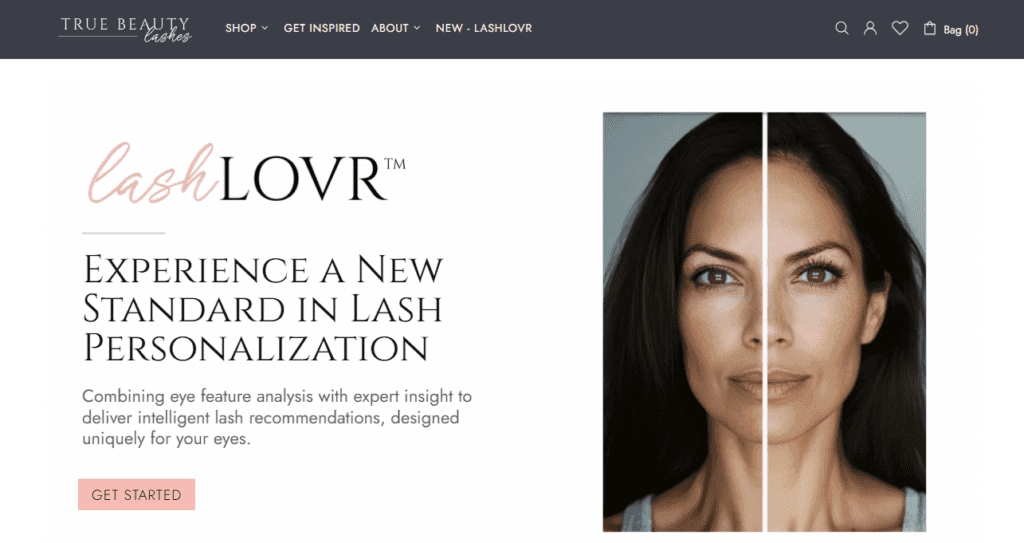
To address these challenges and reinvigorate its ecommerce channel, True Beauty Lashes has launched LashLovr, a virtual try-on experience powered by Perfect Corp's augmented reality (AR) technology. The tool allows shoppers to digitally preview how different lash styles will look on their own face before making a purchase — all directly through the brand's website, InspireTrueBeauty.com.
The strategic logic behind LashLovr is clear. By giving customers a compelling reason to visit and engage with the brand's owned digital storefront, True Beauty Lashes can begin capturing the first-party data that wholesale partnerships have long obscured. Every interaction on the site — from lash try-ons to purchases — feeds the brand's understanding of its customer base in a way that a department store shelf simply cannot.
Virtual try-on technology has been gaining significant traction across the beauty and cosmetics industry, and for good reason. Purchasing decisions for products like false lashes are highly visual and personal. Shoppers want confidence that a style will complement their eye shape and overall look before committing to a buy. By reducing purchase uncertainty, try-on tools have been shown to lower return rates and increase conversion — two metrics that matter enormously in ecommerce.
Why First-Party Data Is Now a Strategic Priority for Beauty Brands
The broader context here matters. As third-party cookies continue to be phased out across major browsers and advertising platforms tighten data-sharing policies, first-party data has become one of the most valuable assets a consumer brand can own. Brands that have relied heavily on retailer relationships or paid social media advertising to reach customers are now finding it difficult to sustain growth without a direct data pipeline.
First-party data — information collected directly from customers through owned channels like websites, email lists, and loyalty programs — enables brands to:
- Build detailed customer profiles based on real purchase behavior and preferences
- Personalize marketing messages and product recommendations at scale
- Reduce customer acquisition costs by targeting high-intent lookalike audiences
- Develop new products informed by actual customer demand rather than guesswork
- Build direct relationships that create long-term brand loyalty
For True Beauty Lashes, the years spent primarily in wholesale have created a gap in this foundational dataset. The LashLovr launch is as much about data infrastructure as it is about the try-on experience itself.
Rebalancing Wholesale and DTC: A Blueprint for Emerging Beauty Brands
True Beauty Lashes is not abandoning wholesale — Stroud has acknowledged that it remains a "significant" contributor to the brand's growth and brand-building efforts. But the goal now is to rebalance the channel mix, making ecommerce the primary channel for direct customer engagement rather than an afterthought.
This rebalancing act is one that many beauty brands are navigating in 2025 and beyond. Wholesale partnerships offer credibility and reach, particularly for new brands trying to establish trust. But sustainable scaling typically requires the kind of customer relationship and data ownership that only a robust DTC channel can provide.
By using an innovative tool like LashLovr to draw consumers directly to its website, True Beauty Lashes is creating an on-ramp back into the DTC world — one that leads with value for the customer rather than simply asking for a purchase.
The Road Ahead for True Beauty Lashes
The launch of LashLovr marks an important inflection point for True Beauty Lashes. It reflects a maturing understanding of what it takes to build a beauty brand for the long term — not just wide distribution, but deep customer knowledge. As Stroud continues to develop the brand's ecommerce capabilities and first-party data strategy, the insights gained through tools like LashLovr will likely shape everything from product development to digital advertising to customer retention programs.
For other emerging beauty brands watching from the sidelines, the True Beauty Lashes story offers a timely reminder: expanding into wholesale early can accelerate visibility, but protecting your DTC channel and the customer data that flows through it is essential to building a brand that can scale on its own terms.