
Ukrainian Drone Maker Fire Point Turns Real Battlefield Strikes Into a Marketing Statement at Eurosatory
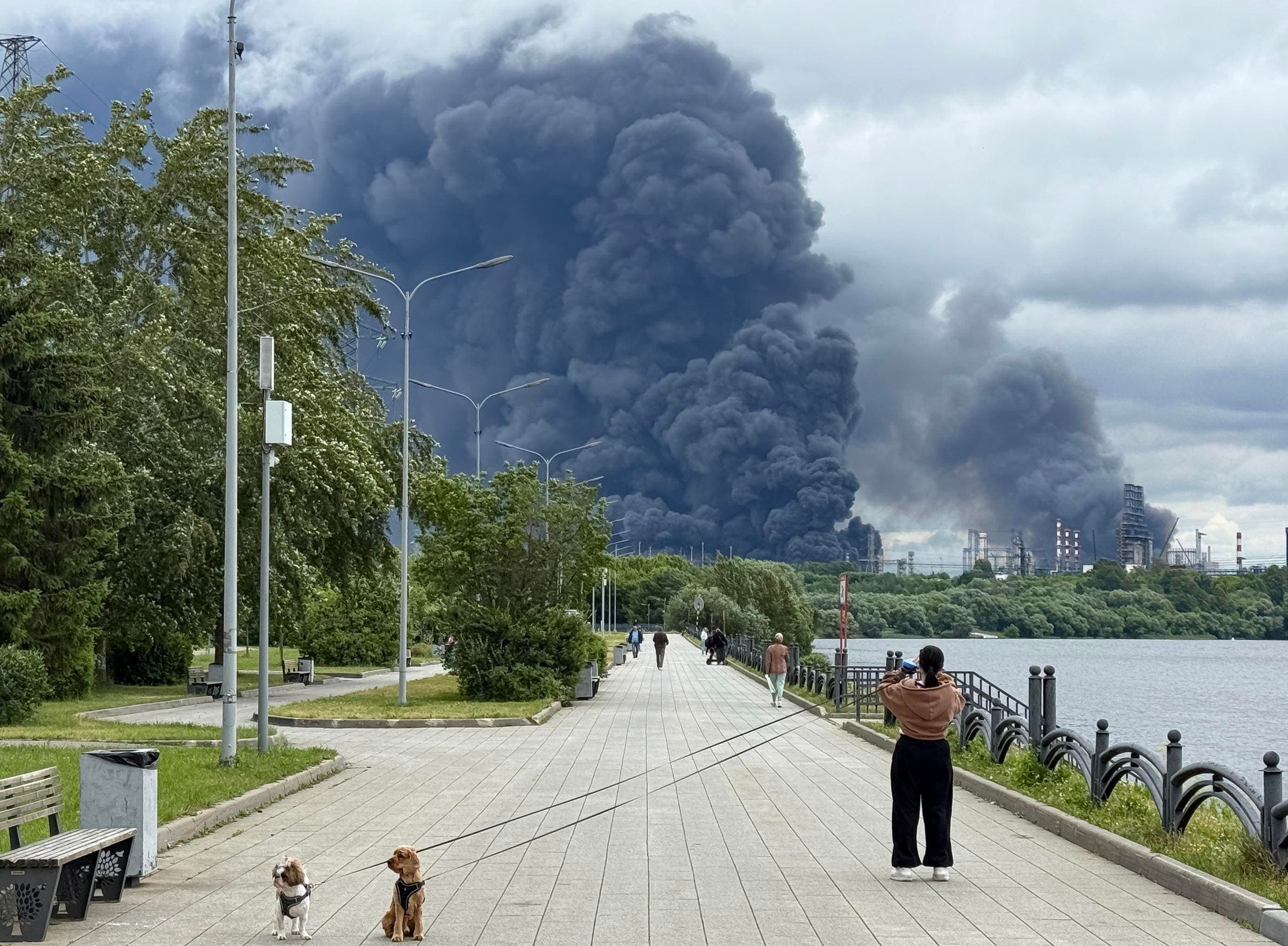
In one of the most audacious marketing moves the global defense industry has seen in recent years, Ukrainian drone manufacturer Fire Point brought live-action proof of its technology's capabilities to one of the world's most prestigious defense exhibitions. Hours after Ukrainian drones struck Russian oil refineries — reportedly near Moscow — Fire Point was already rolling the footage on screens at the Eurosatory defense show in Paris. The message was unmistakable: this is not a prototype. This is a product that works, and the results are already on the news.
The move underscored a broader shift in how Ukraine's rapidly growing defense tech sector is positioning itself on the international stage — not merely as a wartime necessity, but as a legitimate, battle-tested competitor in the global drone market.
What Is Fire Point and Why Does It Matter?
Fire Point is a Ukrainian drone manufacturer that has emerged from the crucible of the ongoing conflict with Russia. Like several other Ukrainian defense technology companies born or radically accelerated by the war, Fire Point has had the unusual — and grim — advantage of testing its products in real combat conditions, against a real adversary, at scale. This kind of live-fire validation is something no Western defense contractor can easily replicate on a testing range.
The company's presence at Eurosatory 2024, one of the world's largest land defense and security exhibitions held biennially in Paris, signals that Fire Point is no longer content to operate solely within Ukraine's wartime supply chain. It is actively seeking international partners, clients, and investors — and it came prepared with the most compelling sales pitch imaginable: footage of its drones hitting their targets on the very morning of the exhibition.
The Eurosatory Moment: Real-Time Results as a Sales Tool
Eurosatory draws defense ministers, military procurement officials, and defense contractors from across NATO and beyond. It is a venue where billion-dollar contracts are discussed and long-term defense partnerships are forged. Bringing footage of an active strike operation — reportedly targeting Russian oil refinery infrastructure — to such a venue just hours after the attack began is a strategy that blurs the line between battlefield operation and product demonstration in a way the industry has rarely, if ever, witnessed.
The footage reportedly showed drone strikes on Russian oil refinery targets, consistent with a broader Ukrainian campaign to disrupt Russian energy infrastructure and logistics chains that have been ongoing throughout the conflict. By presenting this footage at Eurosatory, Fire Point was effectively saying: our drones are in service right now, hitting strategic targets, and you can see the results in real time.
This approach resonates particularly strongly with defense procurement officials in NATO countries who have watched Ukraine's drone warfare capabilities develop with considerable interest. Ukraine has become a proving ground for next-generation drone tactics, and companies like Fire Point are the direct beneficiaries of that hard-won expertise.
Ukraine's Defense Industry: From Survival to Export
When Russia launched its full-scale invasion in February 2022, Ukraine's defense industry faced an existential challenge. Supply chains were disrupted, factories were under threat, and the country depended heavily on foreign military aid. However, that pressure also catalyzed extraordinary innovation. Ukrainian engineers, developers, and entrepreneurs moved with remarkable speed to develop low-cost, high-effect drone systems capable of penetrating sophisticated Russian air defenses and striking deep into enemy territory.
Today, Ukraine's drone sector represents one of the most dynamic and battle-hardened segments of the global defense technology market. Companies have emerged producing everything from first-person view (FPV) kamikaze drones used on the front lines to long-range strike drones capable of reaching targets hundreds of kilometers inside Russian territory. Fire Point sits within this latter, more sophisticated category.
The decision to exhibit at Eurosatory reflects a conscious strategic pivot. Ukraine's government and its defense industry have made clear their ambitions not just to survive the current war, but to leverage the technological and operational knowledge gained during it to build a sustainable, export-oriented defense sector in the post-war period — and, increasingly, during the war itself.
The Ethics and Optics of Wartime Marketing
Fire Point's approach at Eurosatory is not without its complexities. Using footage from an active military operation as a marketing tool raises questions about the intersection of commerce and conflict, and about the responsibilities of defense companies operating in active war zones. Critics might argue that turning a strike — however strategically targeted — into a promotional highlight reel risks normalizing or even glamorizing warfare for commercial gain.
Supporters, however, counter that the defense industry has always operated at this intersection and that for a country fighting for its survival, demonstrating capability to potential partners and allies is not just commercially sensible — it is strategically vital. The faster Ukraine can attract investment and procurement deals for its defense tech companies, the argument goes, the more sustainable its warfighting capacity becomes.
What This Means for the Global Drone Market
Fire Point's Eurosatory appearance is likely to be studied closely by defense analysts and procurement officials for years to come. It signals several important trends worth watching.
Battle-tested credibility is becoming a primary differentiator in the drone market. Countries investing in drone technology increasingly want proof of real-world performance, not just laboratory specifications, and Ukrainian companies now have that proof in abundance.
The Ukrainian defense industry is actively internationalizing, and Eurosatory appearances by companies like Fire Point are just the beginning of what could become a significant presence in global defense procurement discussions.
The line between active military operations and defense marketing is blurring in ways the industry has not previously experienced, raising important questions for policymakers, ethicists, and procurement officials alike.
NATO member states, many of which are rapidly expanding their own drone programs in response to lessons learned from Ukraine, are likely watching Fire Point and its peers as potential suppliers, partners, or models for their own domestic drone development efforts.
Conclusion: A New Kind of Defense Brand Built on the Battlefield
Fire Point's decision to screen footage of a live drone strike on Russian infrastructure at Eurosatory 2024 is more than a marketing stunt — it is a statement about the transformation of Ukraine's defense industry and its growing ambitions on the world stage. In a sector where credibility is everything and where the gap between promise and performance can cost lives, Fire Point arrived in Paris with the most credible pitch possible: proof, delivered in real time, that its technology performs exactly as advertised. Whether or not the tactic generates immediate contracts, it has ensured that the name Fire Point is now firmly on the radar of defense decision-makers around the world.