
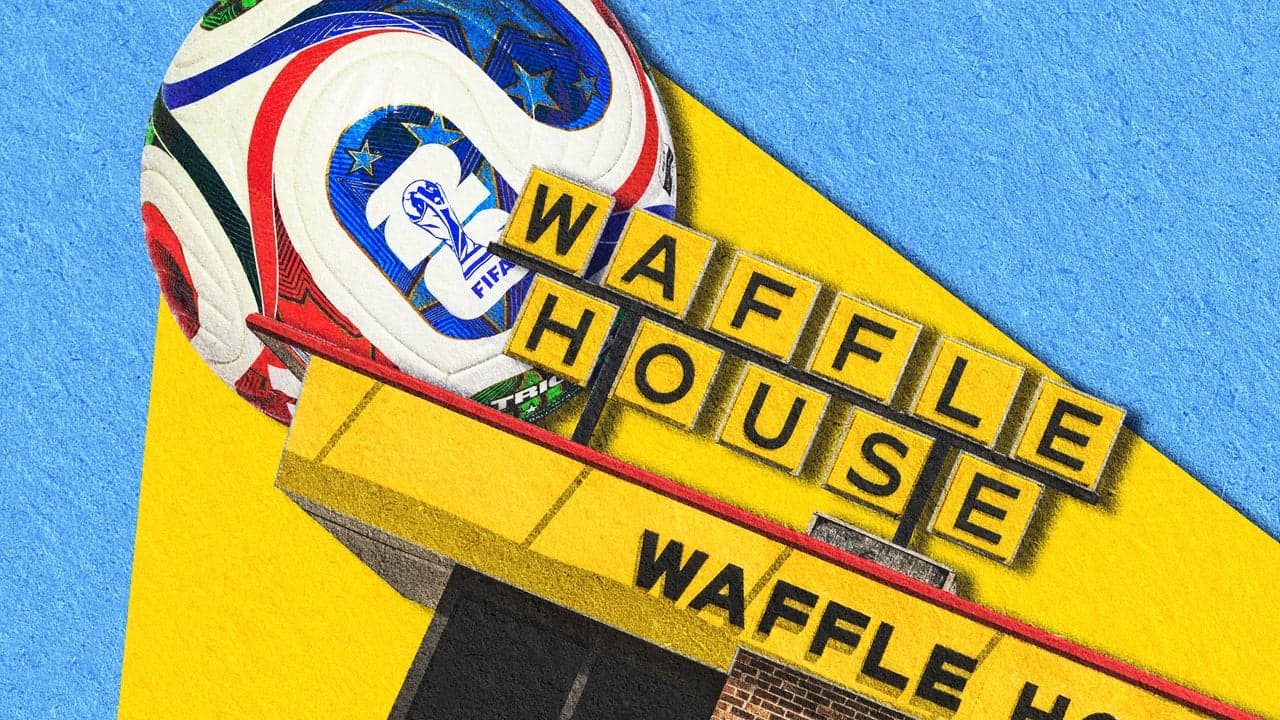
Forget the Trophy — Waffle House Is the Real Winner of the 2026 FIFA World Cup
The 2026 FIFA World Cup was always going to be a massive event. Spread across the United States, Canada, and Mexico, it promised world-class soccer, packed stadiums, and a global spotlight on North American culture. What nobody predicted, however, was that the tournament's biggest breakout stars wouldn't be wearing cleats. They'd be serving scattered, smothered, and covered hash browns at 3 a.m. Welcome to the unexpected cultural phenomenon of the 2026 World Cup: international soccer fans falling head over heels for everyday American brands.
America's Global Reputation Gets an Unlikely Boost
The timing couldn't be more interesting. On the eve of its 250th birthday, the United States is navigating a complicated moment on the world stage. A poll conducted earlier in 2026 revealed that the U.S. is now viewed less favorably than China in many parts of the world — a striking shift from its long-held status as the globe's most admired nation. Cohosting the World Cup amid inflation pressures and various travel restrictions added further complexity to the country's international image.
And yet, something unexpected is happening on social media. International visitors road-tripping between World Cup host cities are posting wave after wave of genuinely enthusiastic, occasionally jaw-dropped content about American culture — not the monuments or the national parks, but the chains. The gas stations. The diners. The big-box stores. And their audiences are absolutely eating it up.
The Brands Going Viral With World Cup Tourists
So which American institutions are capturing the hearts and phone cameras of global visitors? The list might surprise you — or it might not, if you've spent any time on American roads.
- Waffle House: The 24/7 Southern diner chain has become something of a pilgrimage site for international fans, who are marveling at the unpretentious food, the rock-bottom prices, and the friendly staff who somehow manage to cook everything on a tiny open griddle right in front of you.
- Buc-ee's: The Texas-born mega gas station and convenience store is being described by visitors as a genuine tourist attraction in its own right. Clean restrooms, an overwhelming selection of snacks, and sheer impossible scale have made it a social media sensation.
- Walmart: Yes, Walmart. International visitors are wandering the aisles in a state of genuine awe, stunned by the size of the stores, the breadth of the inventory, and the prices.
- Chick-fil-A: The fast-food chicken chain is winning over fans from countries where it simply doesn't exist, with visitors posting rhapsodic reviews of the sandwiches, the waffle fries, and — perhaps most notably — the staff's almost unnervingly polite customer service.
Posts across TikTok, Instagram, and X are full of international fans expressing amazement at the scale of these places, the convenience they offer, and small details like free soda refills — a concept that apparently still feels like a radical act of generosity to much of the world.
A German Fan's Viral Road Trip Captures It All
Perhaps no one has embodied this phenomenon better than a German soccer fan who goes by @FreddyLA7 on X. He kicked off a six-week World Cup road trip across the United States and Canada just before the tournament began, and what started as a travel diary quickly turned into something much bigger. His enthusiastic, wide-eyed posts about routine American experiences attracted hundreds of thousands of followers who couldn't get enough of seeing their everyday world through fresh eyes.
His review of Taco Bell? "The Holy land." His verdict on Waffle House? "Great food, great prices, and friendly staff." His posts captured something genuine: the sincere delight of encountering a culture's everyday life without the filter of preconception. And audiences around the world — including plenty of Americans — found it irresistible.
Why Everyday American Culture Is Such a Compelling Export
There's a deeper story here worth examining. American fast food, retail, and roadside culture have long been exported through movies, TV shows, and advertising — but experiencing them firsthand is clearly a different thing entirely. For many international visitors, brands like Waffle House exist in a kind of mythological space, familiar from cultural references but never actually tasted or touched. Arriving in person and discovering that the coffee really is that cheap, the portions really are that big, and the staff really do say "have a blessed day" with apparent sincerity — it creates a kind of genuine culture shock, and an overwhelmingly positive one.
A Scottish visitor to a Bass Pro Shops location perhaps put it best when he told The New York Times that the experience was "like a theme park and a museum all wrapped into, you know, a big retail store." That's not a criticism. That's wonder.
What This Means for American Soft Power in 2026
In a moment when America's global reputation is under real pressure, the viral embrace of Waffle House and Buc-ee's by World Cup tourists offers a genuinely interesting counterpoint. Formal diplomacy and polling data tell one story. But a German soccer fan calling Taco Bell "the Holy land" while hundreds of thousands of people watch and laugh and share — that tells a different kind of story altogether.
It's not a complete picture, of course. Viral moments don't resolve geopolitical tensions or address the real concerns many people around the world have about U.S. policy and influence. But they do serve as a reminder that culture — messy, commercial, unpretentious, abundant American culture — still has a pull that's hard to manufacture and impossible to fake.
The Takeaway: Soft Power Has Never Smelled So Much Like Syrup
As the 2026 FIFA World Cup continues to bring fans from every corner of the globe to American soil, the brands benefiting most from the spotlight aren't the ones that paid the biggest sponsorship fees. They're the ones that have quietly been doing the same thing for decades: serving hot food fast, keeping the lights on all night, and making people feel, against all odds, genuinely welcome. Waffle House didn't set out to be a symbol of American cultural diplomacy. It just kept the griddle warm. And right now, that's apparently enough to win the world.