
World Cup Fans Left in Tears as Ticket Resale Purchases Fall Through
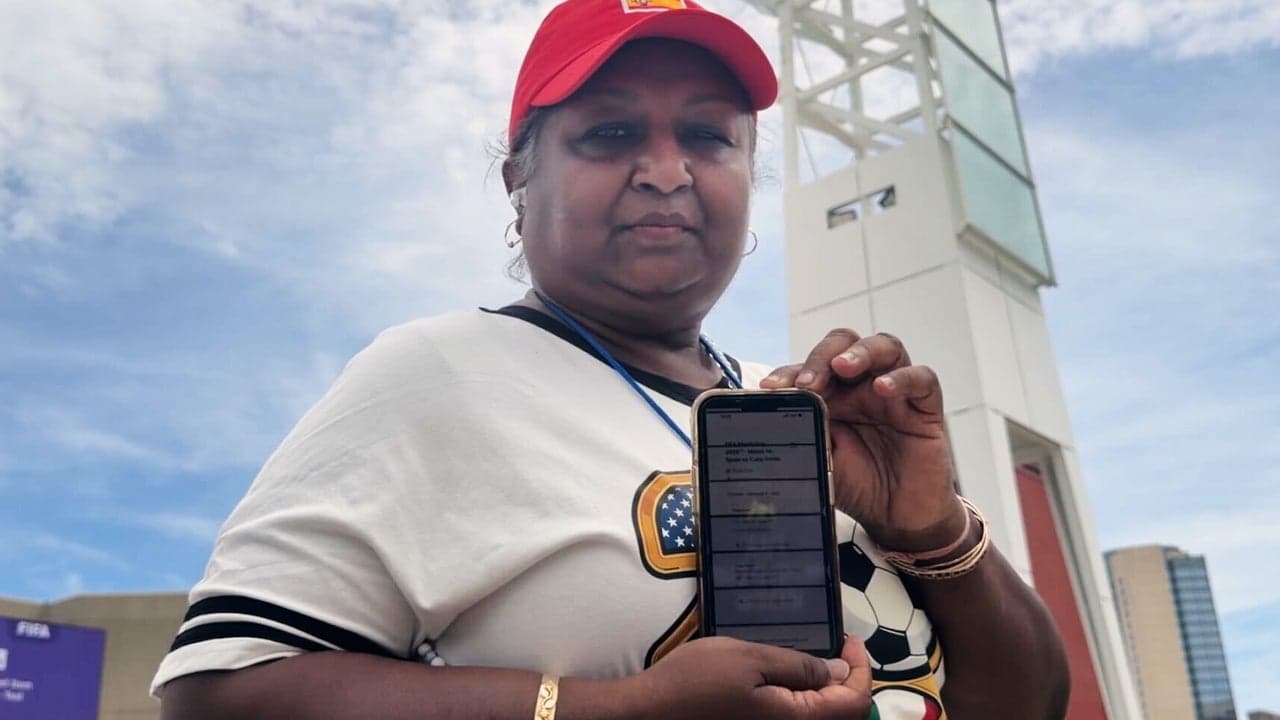
For Bina Ramroop, the 2026 FIFA World Cup was supposed to be a once-in-a-lifetime birthday gift. She had purchased tickets on StubHub months in advance — paying $485 apiece — to surprise her grandson on his 13th birthday with a trip to see Spain face Cape Verde at Atlanta Stadium. Instead, she spent hours standing outside the venue, caught in a frustrating loop between StubHub representatives on the phone and FIFA staff at the ticket booth, while the crowd roared inside without her.
"I didn't want a refund, I didn't want my money back," Ramroop said through tears. "I wanted to go to the game."
Her story is far from unique. Across the World Cup, thousands of fans have taken to social media to share similar experiences — tickets that never arrived, orders canceled at the last minute, and hours wasted trying to resolve disputes between FIFA's official ticketing system and third-party resale platforms. What should have been the thrill of a lifetime has, for many, turned into an expensive and heartbreaking ordeal.
What Is Actually Going Wrong With World Cup Tickets?
The core issue lies in the transfer process between resale platforms and FIFA's official ticketing app. When a fan purchases a ticket through a third-party marketplace like StubHub, SeatGeek, or Vivid Seats, the original seller must transfer that ticket through FIFA's proprietary digital system. In many reported cases, this transfer either fails silently, stalls indefinitely, or simply never happens.
The result is that a buyer has confirmation of a purchase, has paid in full, and yet has no valid ticket to scan at the gate. Meanwhile, both the resale platform and FIFA point fingers at each other, leaving the fan stranded in the middle with no recourse and no time to find an alternative before kickoff.
Interviews with affected fans and industry experts suggest two distinct categories of failure:
- Technical transfer glitches: FIFA's ticketing app uses a tightly controlled digital delivery system that is not always compatible with the transfer mechanisms used by resale platforms. When a ticket is listed for resale, the original purchaser must relinquish it through FIFA's system — and that process can break down due to software mismatches, timing errors, or account verification problems.
- Fraudulent or invalid listings: In more troubling cases, some sellers may have listed tickets they never actually possessed or had already sold elsewhere. While StubHub has firmly denied that fraudulent listings exist on its platform, consumer reports suggest that at least some buyers received refunds because no valid ticket was ever available to transfer.
StubHub and Other Resale Platforms Under Fire
The vast majority of complaints have been directed at StubHub, the dominant player in the event ticket resale industry. However, buyers who used competitors including SeatGeek and Vivid Seats have also reported similar problems, indicating that the issue is not isolated to a single platform but is likely symptomatic of a deeper incompatibility between FIFA's closed ticketing ecosystem and the open secondary market.
StubHub's standard response to failed transfers has been to offer buyers a full refund. While that may satisfy the letter of their buyer guarantee policy, it offers cold comfort to fans who had booked flights, arranged hotel stays, and taken time off work specifically to attend the match. A refund of the ticket price does nothing to compensate for non-refundable travel costs or, in Ramroop's case, the devastation of a ruined birthday surprise.
Critics argue that resale platforms have a responsibility to verify that sellers actually hold transferable tickets before listing them — particularly for events like the World Cup where FIFA's ticketing architecture is known to be restrictive. As of now, no resale platform appears to have implemented a robust pre-sale verification process specific to FIFA events.
FIFA's Ticketing System: A Closed Ecosystem With Real Consequences
FIFA has historically maintained tight control over its official ticketing systems, partly to combat scalping and partly to maintain data control over who attends its events. Tickets for the 2026 World Cup are issued digitally through FIFA's own app and are tied to the original purchaser's account. Transferring a ticket requires the seller to actively release it within the FIFA platform — a step that depends on the seller's willingness, technical capability, and timing.
This closed system creates significant friction when tickets enter the secondary market. Unlike general concert or sports tickets that can be transferred via email link or PDF, FIFA tickets require a multi-step handoff that leaves room for failure at every stage. Critics within the ticketing industry have long argued that FIFA needs to either open its transfer API to approved third-party platforms or crack down more aggressively on listings made through unofficial resale channels.
How to Protect Yourself When Buying World Cup Tickets on the Secondary Market
If you are still planning to attend a World Cup match and are considering purchasing through a resale platform, there are several steps you can take to reduce your risk:
- Buy as early as possible to allow maximum time for the transfer process to complete before match day.
- Confirm the transfer status in your FIFA ticketing app well in advance — do not wait until the day of the match to check.
- Use a credit card for your purchase, as this provides an additional layer of consumer protection through chargeback rights if the ticket fails to materialize.
- Contact both the platform and FIFA directly at the first sign of a problem, and document every conversation with timestamps and reference numbers.
- Check FIFA's official ticket exchange before turning to third-party resale sites — FIFA operates its own resale platform where transferability is guaranteed.
The Bigger Picture: A Broken System That Needs Reform
The wave of failed ticket transfers at the 2026 World Cup has exposed a serious structural problem sitting at the intersection of major event ticketing and the secondary market economy. Fans are paying hundreds — sometimes thousands — of dollars based on the reasonable assumption that a confirmed purchase means a confirmed seat. When that assumption proves false, the consequences go far beyond a financial loss.
For Bina Ramroop, standing outside Atlanta Stadium while the crowd celebrated inside, the damage was not measured in dollars. It was measured in her grandson's disappointment and a memory that was never made. Until FIFA, resale platforms, and regulators take coordinated action to close the gap between these systems, stories like hers will continue to be told long after the final whistle blows.