
America Turns 250: A Nation Divided Between Pride and Doubt
On July 4, 2026, the United States will mark one of the most significant milestones in its history — its 250th anniversary, also known as the semiquincentennial. It is a moment that would seem tailor-made for fireworks, fanfare, and national unity. And yet, for a large portion of the American public, the feelings surrounding this historic birthday are anything but straightforward. A new survey from The Associated Press-NORC Center for Public Affairs Research reveals that while many Americans are proud and excited, just as many are indifferent, conflicted, or even deeply uncertain about what exactly they are being asked to celebrate.
The contrast captures a country at a crossroads — one wrestling with its past, its present, and its future all at once, right in the middle of what should be its grandest party yet.
What the Poll Actually Says About American Sentiment
According to the AP-NORC survey, approximately 4 in 10 U.S. adults say the word "proud" describes how they feel about the nation's 250th anniversary. Roughly 3 in 10 say "excited" fits their emotional state. Those are meaningful numbers, representing tens of millions of Americans who are genuinely looking forward to marking this moment in history.
But those figures are only part of the picture. A significant share of respondents — spanning a wide range of ages, backgrounds, and political affiliations — report feeling indifferent or conflicted. Some say the celebrations feel hollow given ongoing social and political tensions. Others question whether the ideals the country was founded on have ever been fully realized, or whether they are being upheld today.
This is not simply a partisan divide, although political affiliation does play a role in shaping attitudes. It reflects something deeper: a national reckoning with history that has been building for years and has not yet resolved itself neatly enough to allow for uncomplicated celebration.
The Faces of American Pride: Stories Like Duane Mitchell's
For every American who feels conflicted, there is someone like Duane Mitchell. The 78-year-old veteran from Montana has been preparing for the Fourth of July with the kind of enthusiasm that embodies what many people think of when they picture patriotic celebration. Mitchell restored a 1954 Chevrolet pickup truck in red, white, and blue, mounted a decorative eagle on the back, and adorned it with American flags. His plan is to drive it through local parades, with neighborhood kids riding in the bed tossing frozen candy to the crowd.
"Usually we freeze a whole bunch of candy, and I have a couple of kids from down the block who get in the back and throw candy out," Mitchell said. "Everybody loves it."
For Mitchell and others like him, the 250th anniversary is not complicated. It is an opportunity to honor a country they love, to celebrate shared history, and to participate in a tradition that connects them to their communities and their nation. These voices are real, numerous, and deeply sincere — and they deserve to be taken seriously as part of the full picture of how America is feeling right now.
Why the Conflict? Understanding the Complicated Emotions
The reasons why so many Americans feel conflicted about celebrating are layered and varied. Several key themes emerge when examining the broader cultural conversation happening around the semiquincentennial:
- Historical reckoning: Debates over how the United States confronts its history — including slavery, the treatment of Indigenous peoples, and systemic inequality — have intensified in recent years. For many Americans, it is difficult to celebrate the nation's founding without also acknowledging the ways its founding ideals were denied to large portions of its population.
- Political polarization: The United States is experiencing one of its most deeply polarized periods in modern history. When political division runs this deep, a shared national celebration can feel aspirational at best and hollow at worst, depending on where you stand.
- Uncertainty about the future: Related surveys have shown that more than a third of Americans are not confident the country will survive another 250 years. That level of existential doubt about the nation's longevity makes unbridled birthday celebration feel incongruous for many.
- Economic and social pressures: Inflation, housing costs, healthcare access, and other everyday stressors shape how people feel about the country they live in. When daily life feels difficult, abstract patriotic celebration can feel disconnected from lived reality.
The Official Celebrations: What's Planned Across the Country
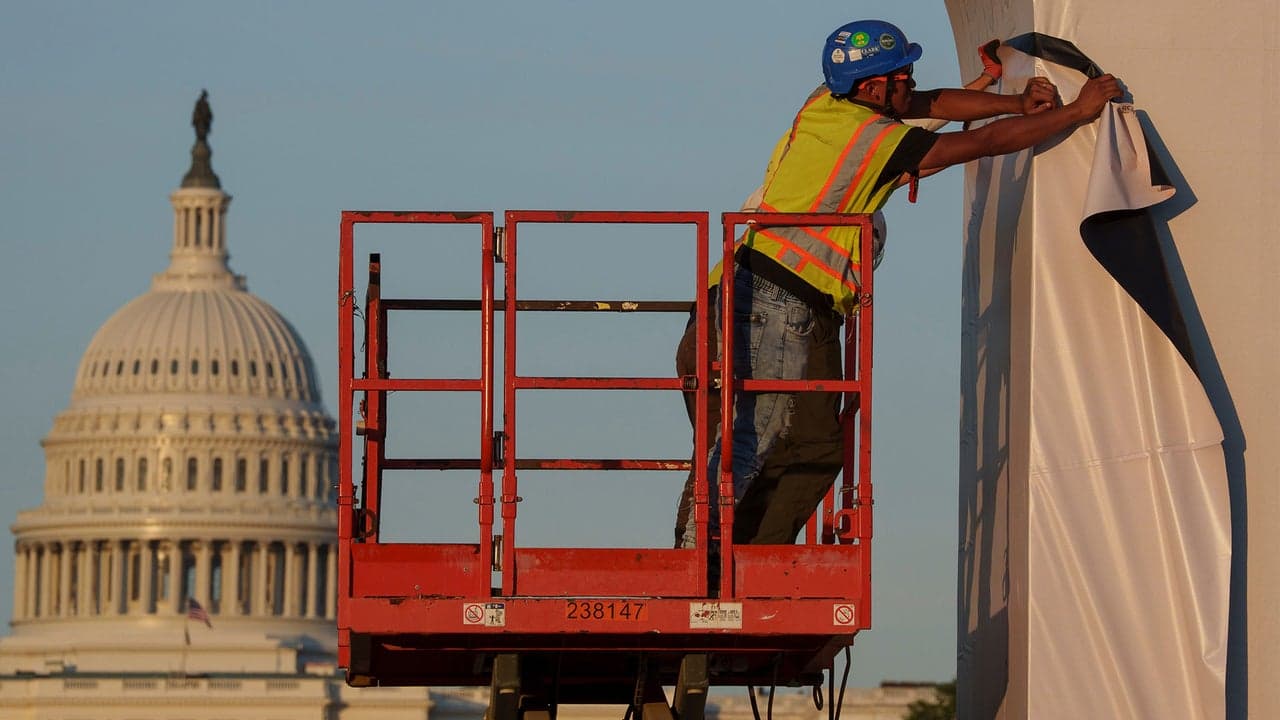
Despite the mixed emotions, the official programming for America's 250th birthday is extensive. Events are planned in cities and towns across the country. President Donald Trump has organized several large-scale commemorations in Washington, D.C., including a fair on the National Mall. A time capsule was recently buried with items intended to speak to Americans living in the year 2276, a gesture that frames the moment as one of genuine historical weight.
Competing logos and branding efforts for the America250 initiative have themselves become a talking point, reflecting the difficulty of creating a single, unified visual identity for a country that often struggles to present a unified face at all. The fact that dueling logos exist for a national birthday is, in its own way, a very American story.
Can a Nation Celebrate and Question Itself at the Same Time?
Perhaps the most honest answer to the complicated feelings surrounding America's 250th birthday is that celebrating and questioning are not mutually exclusive. In fact, for a democracy founded on the idea that citizens have both the right and the responsibility to interrogate their government and their collective story, holding both pride and doubt simultaneously may be the most authentically American response of all.
Parades, fireworks, and frozen candy tossed from a vintage Chevy pickup can coexist with hard conversations about who has been included in the American promise and who has been left out. Marking 250 years does not require erasing complexity — it can mean acknowledging it openly and committing to doing better in the next 250.
What America's Mixed Feelings Tell Us About the Nation's Health
A country where citizens feel free to express ambivalence about national celebrations — where polls can openly reflect doubt and conflict alongside pride and excitement — is, in many ways, demonstrating democratic health rather than weakness. The ability to disagree about how to feel, to hold the tension between love of country and critique of country, is itself a marker of the civic freedom the nation was founded to protect.
As July 4, 2026 arrives, Americans will celebrate in many different ways and from many different emotional starting points. Some will line parade routes, wave flags, and feel uncomplicated joy. Others will attend community events while holding quietly complicated thoughts. Still others may sit out the festivities entirely, unwilling to celebrate a story they feel has not yet included them fully.
All of those responses are, in their own way, part of what it means to be American at 250.