
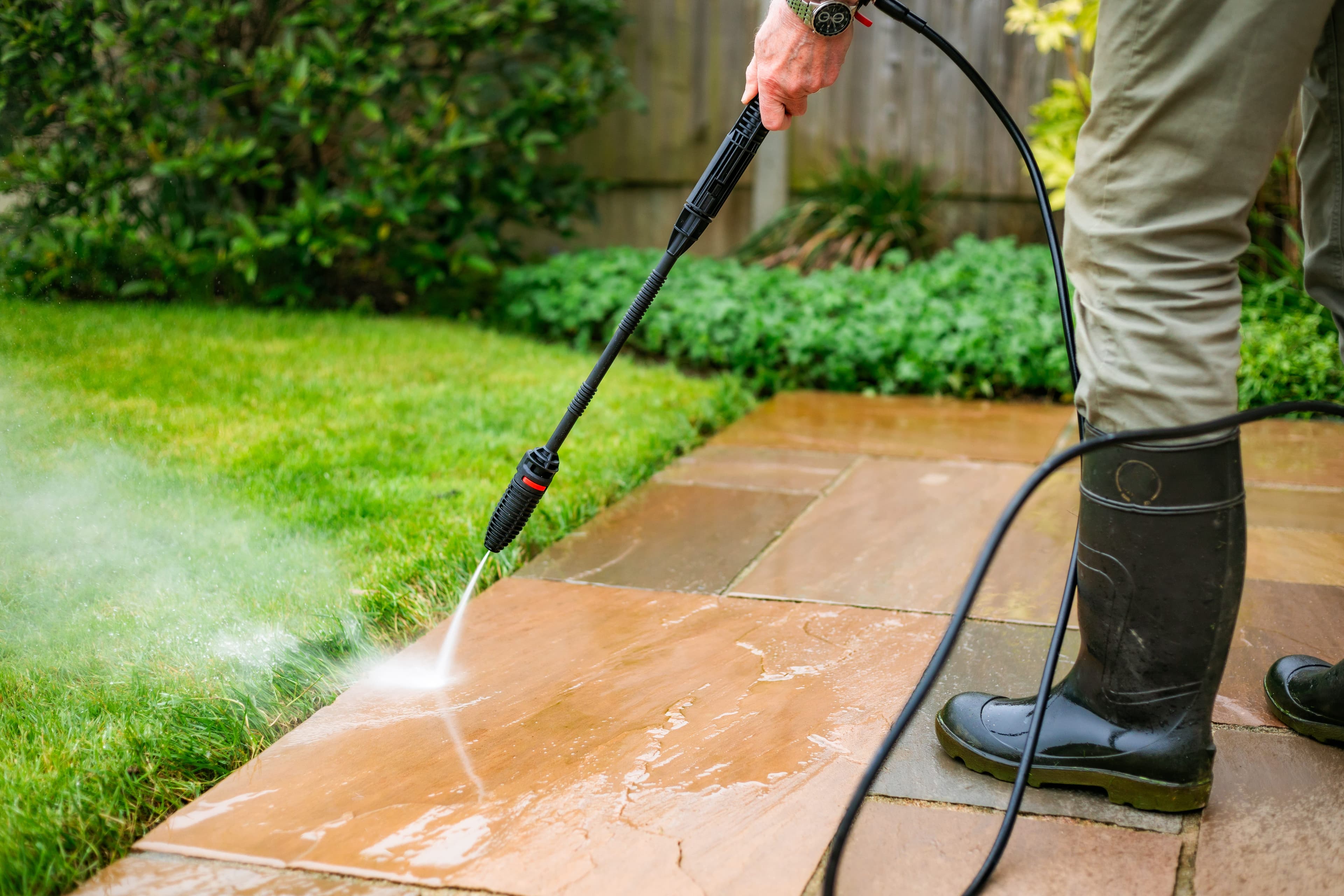
The One Pressure Washer Nozzle Experts Say You Should Leave in the Box
Pressure washers are among the most satisfying tools a homeowner can own. There is something undeniably rewarding about blasting years of grime off a driveway, stripping algae from a fence, or restoring a weathered deck to its former glory in a single afternoon. But with that power comes real risk—and according to professionals who test and operate these machines for a living, one nozzle attachment in the standard kit is responsible for a disproportionate number of injuries, surface damage, and costly repair bills every year.
That nozzle is the red-tipped, zero-degree nozzle. And if you ask anyone who works with pressure washers professionally, they will tell you the same thing: it almost never belongs in your hands during a routine cleaning job.
What Is the Zero-Degree Nozzle and Why Is It So Powerful?
Most pressure washers come with a color-coded set of nozzle tips, each designed to deliver water at a different spray angle. The green tip sprays at 25 degrees, the white at 40 degrees, the black at 65 degrees (typically used for soaping), and the yellow at 15 degrees. Then there is the red tip—the zero-degree nozzle—which concentrates the entire water stream into a single, pinpoint jet.
To understand why this matters, consider the physics. A pressure washer operating at 2,000 PSI distributes that force across whatever spray angle the nozzle produces. When you switch to a zero-degree tip, all of that pressure is focused into a stream roughly the width of a pencil point. The effective impact force at the surface skyrockets, turning what is essentially a garden hose into something closer to a high-pressure cutting tool. Some commercial-grade machines paired with this nozzle can generate enough localized force to break skin, strip paint, and gouge hardwood in seconds.
The Real Danger: It Can Seriously Injure You
This is not a hypothetical hazard. Emergency rooms treat thousands of pressure washer injuries annually in the United States alone, and a significant portion of them involve the zero-degree nozzle or other high-concentration spray settings. High-pressure water injection injuries—where the jet penetrates the skin—are classified as medical emergencies. They are deceptively small wounds on the surface but can cause catastrophic internal damage, including infection, tissue death, and in severe cases, the need for amputation.
What makes this especially dangerous for casual users is that the injury does not always look serious at first glance. A small puncture wound from a pressure washer blast may bleed only minimally, leading the person to dismiss it as minor. In reality, fluid and contaminants have been forced deep into the tissue, and without immediate medical treatment, the consequences can be severe.
Even at a distance of a few feet, the zero-degree nozzle can cause harm. Accidental deflection off hard surfaces can redirect that jet toward your legs, feet, or bystanders. Water ricocheting off concrete at zero degrees carries enough force to lacerate skin without direct contact.
What It Does to Your Deck, Siding, and Other Surfaces
Beyond the risk to your body, the red nozzle wreaks havoc on the very surfaces you are trying to clean. Wood is particularly vulnerable. The concentrated stream can dig grooves into deck boards, raise the grain permanently, and create furrows that are nearly impossible to sand out evenly. What begins as a cleaning project ends with a surface that looks worse than before—and requires professional refinishing to fix.
Vinyl siding is another casualty. The zero-degree tip can crack, dent, or punch holes through vinyl panels, and the force can also drive water behind the siding into insulation and wall cavities, creating moisture problems and mold risk that are expensive to remediate.
Even concrete and brick—materials most people assume are indestructible—can suffer pitting and surface erosion with prolonged zero-degree exposure. Mortar joints between bricks are especially susceptible to being blasted loose, which can compromise the structural integrity of walls and walkways over time.
So When, If Ever, Should the Zero-Degree Nozzle Be Used?
Professional pressure washer operators do occasionally use the zero-degree nozzle, but under very specific, controlled circumstances. It may be appropriate for removing stubborn rust spots from bare metal, cleaning extremely caked mud from industrial equipment, or clearing blockages from tough surfaces where no surrounding material is at risk. Even then, operators use protective gear, maintain safe distances, and apply the nozzle only in short, deliberate bursts.
For the average homeowner cleaning a patio, deck, vehicle, or exterior wall, there is virtually no legitimate use case for the red nozzle. The 15-degree yellow tip or 25-degree green tip will handle the overwhelming majority of tough cleaning tasks safely and effectively.
Which Nozzles Should You Actually Be Using?
- Yellow (15-degree): Best for stripping paint, removing heavy mildew from concrete, and cleaning heavily soiled driveways. Still powerful, but the wider angle distributes force far more safely than the red tip.
- Green (25-degree): The most versatile nozzle for general cleaning. Ideal for decks, fences, patios, garden furniture, and vehicles. Safe for most outdoor surfaces with proper technique.
- White (40-degree): The gentlest cleaning nozzle. Perfect for windows, screens, painted surfaces, and anything delicate. Also excellent for rinsing soap off cars or siding after a pre-soak.
- Black (65-degree): Designed for applying detergent and soap, not high-pressure cleaning. The low pressure generated at this angle allows soap to coat surfaces without blasting them.
Essential Pressure Washer Safety Tips Every User Should Know
Even when using safer nozzles, pressure washers demand respect. Always wear closed-toe shoes—ideally steel-toed boots—when operating one. Eye protection is non-negotiable, as debris and deflected water can cause serious eye injuries. Keep children and pets well away from your work area, and never point the wand at another person, even as a joke. Always be aware of where the stream might deflect off hard surfaces.
Before starting any job, test your chosen nozzle on an inconspicuous patch of the surface. Even the green or yellow tip can damage softwood, older concrete, or weathered paint if held too close or moved too slowly. Keep the wand moving and maintain a consistent distance—typically 12 to 18 inches for most surfaces—to avoid concentrating force in one spot.
The Bottom Line
The red, zero-degree pressure washer nozzle is not a tool for homeowners—it is a liability. The risk it poses to human skin, wooden surfaces, vinyl siding, and even masonry far outweighs any cleaning benefit it might offer in a residential setting. The professionals who test these machines for a living are unambiguous: leave the red tip in the kit, reach for the green or yellow instead, and get your surfaces just as clean without putting yourself or your property in danger. Power is only useful when it is applied wisely—and in this case, wisdom means knowing which nozzle to put down.