
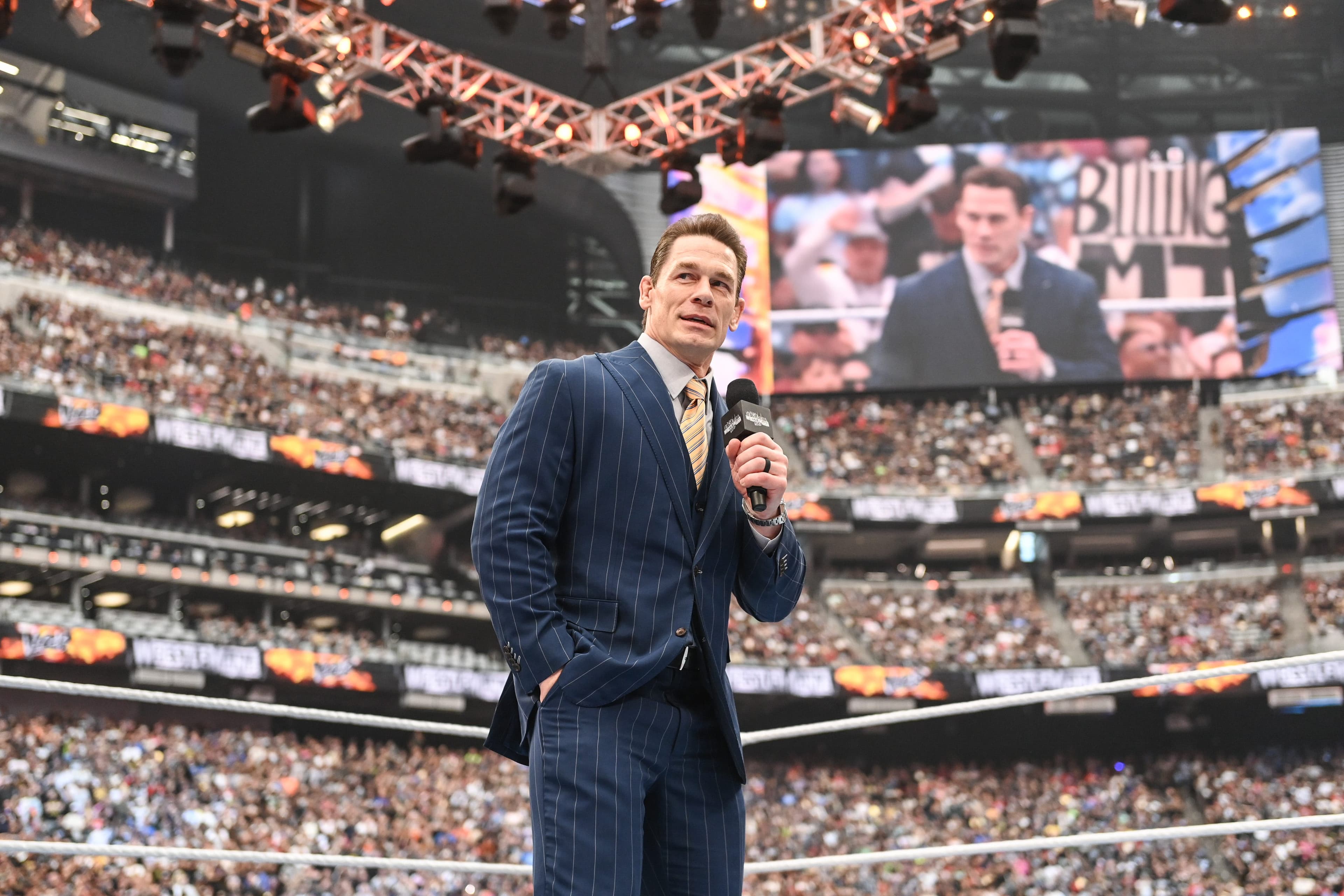
John Cena Opens Up About His WWE Legacy in a Candid and Surprising Statement
For more than two decades, John Cena has been one of the most recognizable names not just in professional wrestling, but in global entertainment. From his early days in WWE to blockbuster Hollywood films, Cena has built a legacy that few athletes or entertainers can match. Yet, in a recent exclusive interview, the 16-time world champion made a statement that left many fans stunned: he genuinely hopes that WWE fans will forget him someday—and his reasoning is far more thoughtful and selfless than you might expect.
What Did John Cena Actually Say?
In a candid and reflective conversation, John Cena got remarkably honest about how he views his own place in the history of WWE. Rather than clinging to a desire for eternal recognition—the way many athletes and entertainers understandably do—Cena expressed a hope that the wrestling world would eventually move on from him completely. At first glance, this might seem like a strange or even self-deprecating sentiment coming from someone who spent years in the spotlight defined by the phrase "you can't see me." But when Cena explains his reasoning, the message becomes surprisingly moving.
Cena's core argument is rooted in what he believes is best for WWE itself. He has spoken about how the wrestling business thrives when new stars emerge and capture the hearts of audiences. For that to happen authentically and powerfully, the crowd needs space—emotional and cultural space—to embrace the next generation. If fans remain too deeply attached to the legends of the past, it becomes harder for new talent to step into the light and claim their moment. In short, Cena wants to be forgotten because he wants WWE's future to be bigger than its past.
A Legacy Built on Putting Others First
This is not the first time John Cena has demonstrated a philosophy of elevating others over himself. Throughout his career, Cena was known for his willingness to work with younger talent, help build storylines around rising stars, and use his massive platform to shine a light on people who needed the opportunity. His approach to legacy appears to be an extension of that same mindset.
In the professional wrestling world, there is a long-standing debate about which legends were willing to "put over" younger talent—industry speak for helping a newer performer look strong or win a feud—and which ones protected their own status above all else. Cena, despite being one of the biggest stars the company has ever produced, has generally been praised for his generosity in this regard. His comments about wanting fans to forget him feel consistent with who he has been behind the scenes for years.
Why This Statement Resonates Beyond Wrestling
What makes Cena's perspective particularly compelling is that it speaks to something universal about achievement, ego, and the desire to be remembered. Most people spend their lives trying to leave a lasting mark. We build monuments, write books, chase fame, and document our every moment on social media in the hope that we will not be forgotten. John Cena is essentially arguing the opposite: that true success might mean creating something so much bigger than yourself that your own name eventually fades into the background.
There is a kind of quiet wisdom in that. The greatest teachers, coaches, and leaders often measure their success not by how much people remember them, but by how well the people they mentored went on to thrive independently. Cena seems to be applying that same framework to his wrestling career—asking not "will they remember me?" but rather "did I leave this place better than I found it?"
What This Means for WWE's Future
For WWE as a company, Cena's comments arrive at a meaningful moment. The promotion has been actively working to establish a new generation of stars capable of carrying the company forward for the next decade. Superstars like Cody Rhodes, Gunther, Rhea Ripley, and others have made significant strides in recent years, and the company has invested heavily in building new fan connections around fresh faces.
If the fans who grew up idolizing John Cena can find it in themselves to transfer that energy and passion onto the next wave of talent, it would validate everything Cena has said about hoping to be forgotten. It would mean that the emotional investment fans made in him was not the end of the story—it was just the first chapter in a much longer love affair with professional wrestling.
The Complicated Emotion of Moving On
Of course, it is one thing for Cena to say he wants fans to forget him, and another thing entirely for those fans to actually do it. For millions of people around the world, John Cena represents childhood memories, life lessons, and deeply personal moments connected to the characters and stories he brought to life in the ring. Forgetting him—truly letting go—is not something that happens overnight, and perhaps it should not.
But maybe that is the point. Cena is not asking fans to erase the memories. He is asking them to let those memories live in the past while building new ones with the stars of tomorrow. That is not forgetting in the painful sense. That is growing—and it is the most fitting legacy imaginable for someone who spent his career telling the world that anything is possible.
Final Thoughts: A Champion's Most Selfless Statement
John Cena has said and done many memorable things over the course of his extraordinary career. But his hope that fans will one day forget him might be the most revealing thing he has ever shared. It strips away the ego, the spectacle, and the persona, and leaves behind something real: a man who genuinely loves the business he gave so much of himself to, and who wants nothing more than to see it flourish long after his chapter has closed. In that sense, forgetting John Cena might be the greatest tribute fans could ever pay him.