
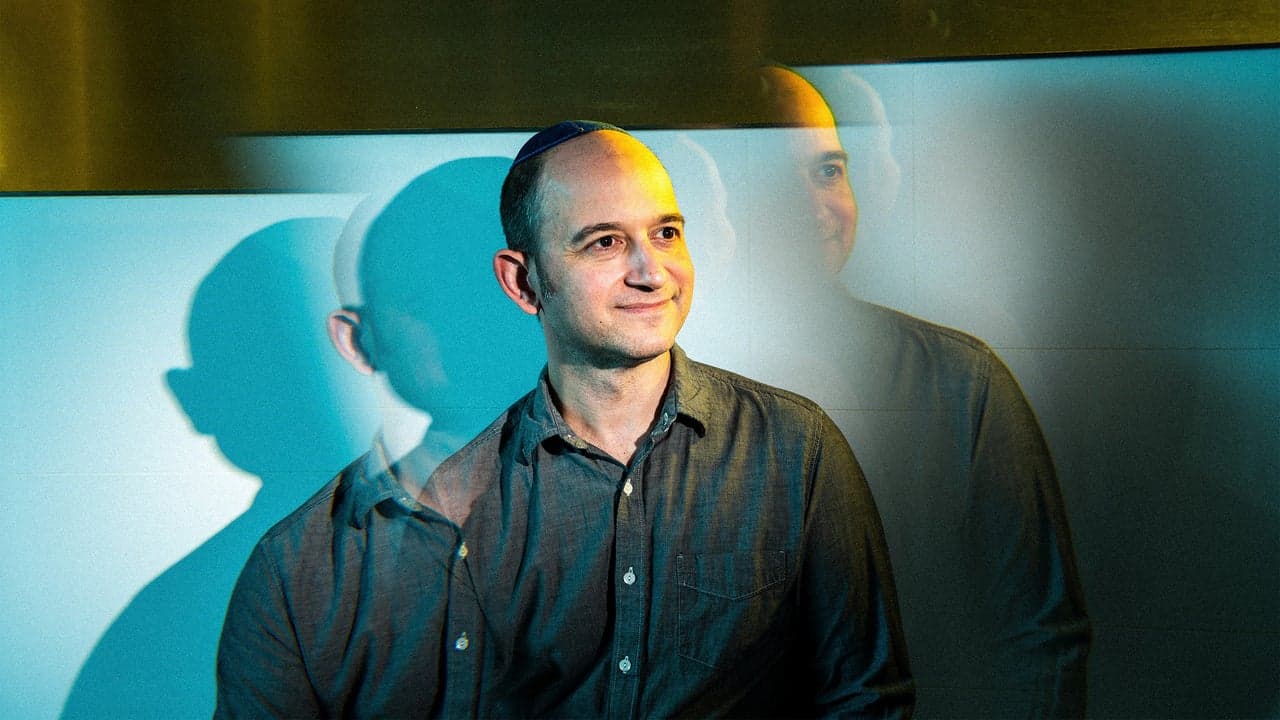
Noam Shazeer Leaves Google for OpenAI: What It Means for the AI Industry
The artificial intelligence talent wars just reached a new flashpoint. Noam Shazeer, one of the most influential AI researchers in the world and a key figure behind Google's Gemini model, has announced he is leaving Google to join OpenAI. The move sends shockwaves through an industry already defined by fierce competition for elite engineering talent, and it raises serious questions about Google's ability to retain its most valuable minds in the race to dominate generative AI.
Who Is Noam Shazeer? A Brief Background
To understand the magnitude of this departure, it helps to know exactly who Noam Shazeer is and why his name carries so much weight in AI circles. Shazeer joined Google as an early employee back in 2000, making him one of the company's longest-serving technical contributors before his first departure.
In 2017, he co-authored one of the most consequential research papers in modern computing history: "Attention Is All You Need." That paper introduced the transformer architecture, a foundational breakthrough that now underpins virtually every major large language model (LLM) in existence today — including OpenAI's own GPT series, Google's Gemini, Meta's LLaMA, and countless others. Without the transformer architecture, the current AI boom likely would not exist in its present form.
In 2021, Shazeer left Google the first time to co-found Character.AI, a companion chatbot startup that quickly garnered significant user traction and investor interest. That venture ended — or rather, transformed — when Google paid a reported $2.7 billion to bring Shazeer and a portion of his Character.AI team back into the fold in 2023. It was a staggering sum that underscored just how valuable top-tier AI talent has become in today's market.
From Gemini Co-Lead to OpenAI: The Departure Announcement
After returning to Google, Shazeer served as Vice President of Engineering and co-lead of Gemini, Google's flagship AI model and its primary answer to OpenAI's ChatGPT. By many accounts, his contributions during this period were instrumental in helping Gemini close the capability gap with ChatGPT — a gap that had once been seen as a significant competitive liability for Google.
Now, just two years after that $2.7 billion reunion, Shazeer is heading for the door again — and this time, he's walking directly into the arms of Google's most formidable rival. He confirmed the move in a post on X, writing: "I'm excited to share that I'll be joining OpenAI and look forward to working with the exceptional team there."
He was careful to acknowledge his time at Google warmly, adding: "It was a difficult decision to move on. I'm incredibly proud of the amazing team at Google and everything we've built together. It has been an honor and a pleasure to work with all of you."
The tone was gracious, but the implications are anything but quiet. One of the architects of modern AI is now switching sides in the most competitive technological race of our generation.
Why This Move Matters for the AI Talent Wars
The AI talent wars are not a metaphor — they are a defining structural reality of the tech industry right now. Companies like Google, OpenAI, Meta, Microsoft, Anthropic, and a growing roster of well-funded startups are all competing for a relatively small pool of researchers and engineers capable of working at the frontier of AI development. Compensation packages have become extraordinary, and even billion-dollar buybacks like Google's acquisition of the Character.AI team are now considered standard tools in the recruitment arsenal.
Shazeer's departure to OpenAI is significant for several reasons:
- Symbolic weight: As a co-author of the transformer paper, Shazeer is not just a talented engineer — he is a foundational figure in the field. His joining OpenAI is a major reputational signal about where the most exciting work in AI is happening.
- Competitive intelligence risk: While non-compete agreements and confidentiality clauses govern what any departing executive can bring with them, Shazeer's deep knowledge of Gemini's architecture, development roadmap, and internal strategy is an inherent advantage for any competitor that employs him.
- Morale and retention: Losing a leader of Shazeer's stature can have cascading effects on team morale and signal to other top engineers that leaving for competitors is both possible and acceptable, even after lucrative retention deals.
- OpenAI's momentum: This hire reinforces the narrative that OpenAI, despite its own internal turbulence in recent years, remains a magnetic destination for the world's best AI talent.
What Happens to Google Gemini Now?
Google has built a deep bench of AI talent, and Gemini is far from a one-person project. The model has made impressive strides, and Google's infrastructure, data advantages, and research heritage are formidable. The company is unlikely to stumble because of a single departure, no matter how high-profile.
That said, losing a co-lead mid-development cycle is never frictionless. Teams need to reorganize, priorities may shift, and the morale impact of watching a two-year, $2.7 billion investment walk out the door is real. Google will need to move quickly to demonstrate internal stability and a clear path forward for Gemini's continued development.
The Bigger Picture: AI's Defining Talent Moment
Noam Shazeer's move from Google to OpenAI is more than a career change — it is a bellwether for the state of the AI industry in 2025. The people building the future of artificial intelligence are increasingly mobile, fiercely recruited, and capable of reshaping competitive dynamics with a single job announcement. For companies with ambitions in AI, the message is clear: talent retention is not a human resources problem. It is a strategic imperative.
As the AI landscape continues to evolve at breakneck speed, the question of where the world's top researchers choose to work may prove just as important as which company has the most compute or the most data. And right now, Noam Shazeer has chosen OpenAI.