
Pixar Has Always Known How to Scare Adults — Toy Story 5 Is No Different
Before Walt Disney softened them for the silver screen, fairy tales were brutal. They were designed not to comfort children, but to warn them — about the wolf at the door, about trusting strangers, about the terrifying unpredictability of the world. Pixar, for all its colorful animation and heartwarming soundtracks, has never fully abandoned that tradition. And with Toy Story 5, the studio may be delivering its most pointed warning yet — one aimed squarely at adults sitting in those theater seats with their kids.
The fear at the heart of this film isn't a monster under the bed. It's a tablet on the shelf. And for millions of white-collar workers living through the most disruptive technological shift of their professional lives, that might be scarier than any fairy tale villain ever was.
The Toy Story Franchise Has Always Been About Replacement
To understand why Toy Story 5 resonates so deeply, you have to go back to where it all started. The original Toy Story, released in 1995, built its entire emotional engine around one simple fear: being replaced by something newer, shinier, and more exciting.
Woody, the lovable cowboy, had been Andy's favorite toy for years. Then Buzz Lightyear arrived — technologically dazzling, full of lights and sounds and space-age swagger — and everything changed. Woody's place in the world was suddenly uncertain. His value, once unquestioned, was now contingent on whether a child preferred the old or the new.
It's worth noting that the film itself was a technological landmark. Toy Story was the first feature-length computer-animated film ever released, meaning the story of a toy fearing digital disruption was being told through digital disruption. That meta-layer was not accidental. Pixar has always been self-aware about what it represents.
Now, thirty years later, the franchise is returning with a villain that doesn't have a face or a cape. It has a touchscreen.
What Is Toy Story 5 Actually About?
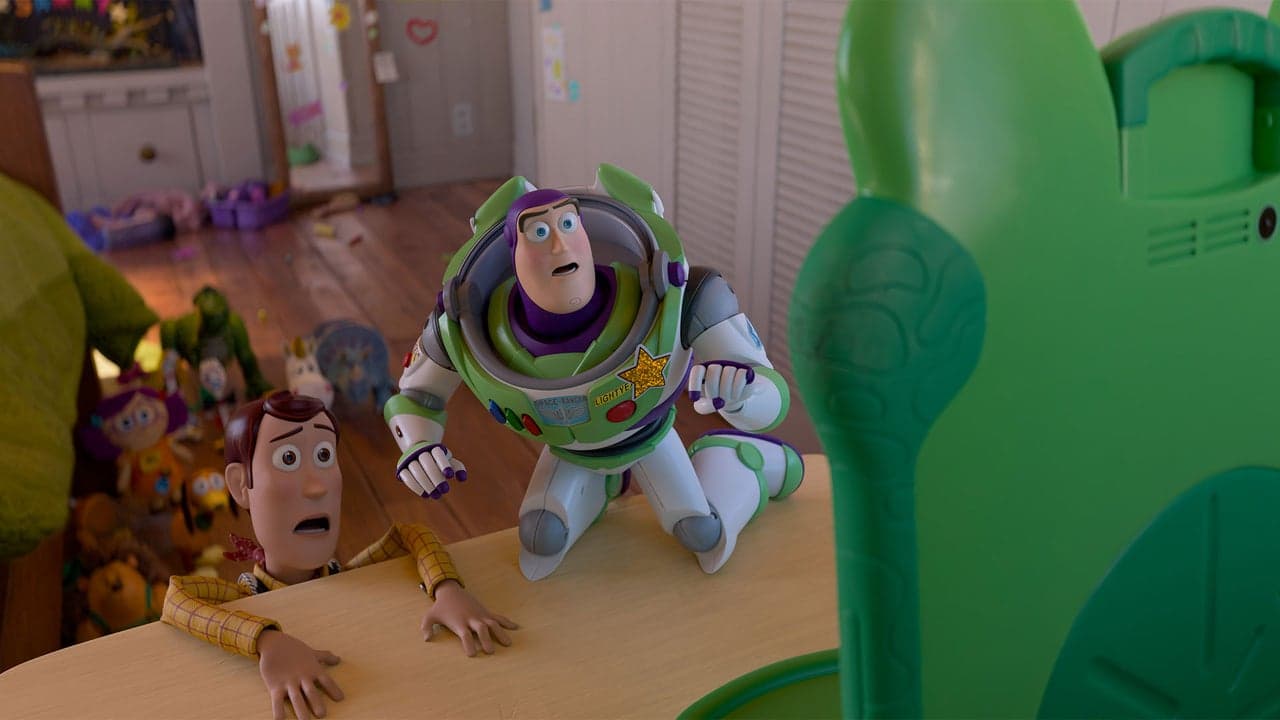
In Toy Story 5, which is now playing in theaters, Jessie, Buzz Lightyear, and the rest of the beloved toy gang find themselves threatened by a sleek new device called Lilypad — a tablet that, presumably, does everything they can do and more. The toys' relevance is at stake, their bonds with their child seemingly breakable by a piece of glass and circuitry.
Faced with this existential threat, the gang does what any team of experienced workers might do when confronted with automation: they call in their most trusted veteran. Woody comes back out of retirement to help save the day.
The parallel to modern workplace dynamics is almost too on-the-nose. Experienced professionals watching generative AI tools absorb tasks that once defined their careers will find this premise uncomfortably familiar. The question the film seems to be asking is one that boardrooms, HR departments, and late-night anxious Google searches are asking too: what happens to the old when the new arrives and refuses to leave?
Why White-Collar Workers Are Feeling Like Woody Right Now
The fear of AI-driven obsolescence is no longer a fringe concern or a distant science-fiction scenario. It is a present, documented, and measurable anxiety reshaping how millions of people think about their careers.
Knowledge workers — those who write, analyze, design, code, consult, or manage — are among the most exposed to automation. Unlike previous waves of technological disruption, which largely displaced manual and repetitive physical labor, artificial intelligence is moving up the skills ladder with remarkable speed. Tasks that once required years of training and experience can now be approximated, if not replicated, by a well-prompted language model.
This is precisely what makes Toy Story 5 feel timely rather than merely nostalgic. The toys in Pixar's universe are stand-ins for anyone who has ever built their identity and self-worth around a professional skill, only to watch that skill become automated, commoditized, or simply less valued. Woody's existential dread isn't about being plastic — it's about being made irrelevant.
What Pixar Might Be Telling Us About the Age of AI
Pixar has a long history of embedding genuinely uncomfortable ideas inside family-friendly packaging. WALL-E tackled consumerism and environmental collapse. Inside Out explored the neuroscience of emotional processing. Up opened with one of the most efficient depictions of grief ever committed to film.
Toy Story 5 appears to be following this tradition by giving children a story about friendship and adventure while giving their parents a story about economic anxiety and the search for purpose in a world that keeps updating its operating system without asking whether you want to upgrade.
The Brothers Grimm understood something important: the stories that stick with us are the ones that name the thing we're afraid of. They don't resolve it neatly. They sit with it. They make us look at it.
A sleek tablet called Lilypad sitting on a shelf, slowly making beloved toys feel unnecessary — that image is doing exactly what a good fairy tale is supposed to do. It's holding a mirror up to something real.
The Bottom Line: Toy Story 5 Is a Film for Our Moment
Whether you're taking your kids to see it for the nostalgia, the animation, or the return of Woody and the gang, Toy Story 5 is carrying more thematic weight than its colorful trailers might suggest. It is a film about what happens when the tools we create begin to overshadow the people — or toys — who came before them.
For white-collar workers navigating an AI-disrupted job market, watching a cowboy doll fight for relevance against a tablet might feel less like escapism and more like a documentary. And maybe that's exactly the point. The best stories don't take us away from our fears. They help us understand them well enough to face them — even if the hero is made of felt and yarn.