
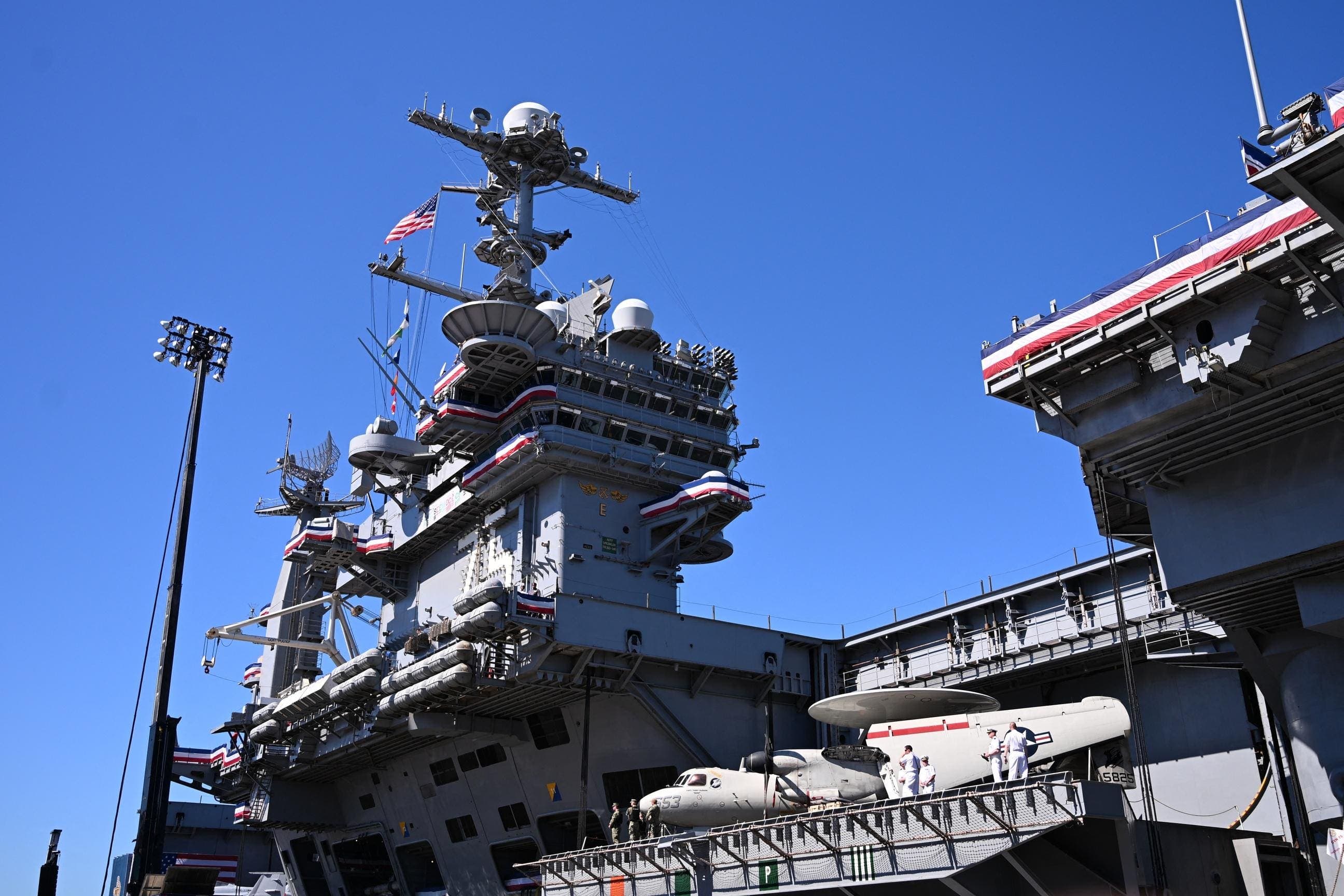
U.S. Navy to Reduce Sailor Involvement in USS Harry S. Truman's Next Refueling Overhaul
The United States Navy is preparing to make a significant operational shift in how it manages one of the most complex and technically demanding processes in military maintenance: the refueling and complex overhaul (RCOH) of a nuclear-powered supercarrier. Beginning next June, the Navy will reduce the number of active-duty sailors directly involved in the maintenance work on the USS Harry S. Truman (CVN 75), instead relying more heavily on civilian contractors to carry out the labor-intensive work. This strategic decision has sparked considerable discussion among defense analysts, naval personnel, and policymakers regarding what it means for military readiness, workforce development, and the long-term sustainability of America's carrier fleet.
What Is a Refueling and Complex Overhaul?
To understand the magnitude of this policy shift, it is important to first grasp what a refueling and complex overhaul actually involves. Nuclear-powered aircraft carriers are among the most sophisticated machines ever built by human hands. They are powered by nuclear reactors that, over the course of roughly 20 to 25 years of service, consume their nuclear fuel and require a complete refueling process. This is not a simple task — it involves defueling the spent nuclear material, replacing it with fresh fuel, and simultaneously conducting a sweeping overhaul of virtually every major system on the ship.
An RCOH typically takes several years to complete and costs billions of dollars. During this time, the carrier is dry-docked at a shipyard — in most cases, Newport News Shipbuilding in Virginia, the only facility in the United States capable of performing nuclear carrier overhauls. Systems ranging from propulsion and weapons to habitability spaces and combat electronics are inspected, repaired, modernized, or replaced. The process essentially resets the clock on a carrier's operational lifespan, allowing it to serve for another two decades or more.
The Shift Toward Contractor-Led Maintenance
Traditionally, a significant portion of the maintenance and support work during an RCOH has been performed by Navy sailors — specifically, the ship's crew itself and specialized Navy teams. These sailors gain hands-on experience working alongside shipyard professionals, developing technical expertise that is invaluable when the vessel returns to sea operations. However, the Navy's new approach for the USS Harry S. Truman's upcoming overhaul will see a larger share of that work transferred to civilian contractors.
The rationale behind this decision is multifaceted. Navy leadership has pointed to workforce efficiency, cost management, and the need to maintain operational personnel readiness as key drivers. By reducing the number of sailors assigned to shipyard maintenance duties, the service can potentially keep more personnel available for fleet operations, training rotations, and other mission-critical assignments. Contractor firms that specialize in naval maintenance bring dedicated, experienced workforces that can execute complex tasks with a high degree of technical proficiency.
Advantages of a Contractor-Heavy Approach
There are several potential advantages to increasing contractor involvement in carrier overhauls. First, specialized contractors often maintain a standing workforce of skilled tradespeople — welders, electricians, nuclear technicians, and engineers — who perform this type of work continuously, rather than rotating through as sailors might on typical sea-shore duty cycles. This continuity can lead to greater efficiency and fewer errors over the course of a multi-year project.
Second, removing sailors from extended shipyard assignments can improve morale and retention. Long stints in a shipyard environment, away from sea duties and operational missions, have historically been a source of frustration for many Navy personnel. Reducing these assignments may help the service retain talented sailors who might otherwise choose to leave the military.
Third, from a budgetary standpoint, there may be opportunities to optimize costs by negotiating competitive contracts and leveraging the efficiency of private-sector firms that operate at scale across multiple naval projects simultaneously.
Concerns and Criticisms
Despite these potential benefits, the decision has not been without controversy. Critics argue that reducing sailor involvement in the overhaul process comes at the cost of institutional knowledge and hands-on technical training. When sailors work alongside shipyard technicians during an RCOH, they gain a deep understanding of their ship's systems that cannot be replicated in a classroom or a simulator. This knowledge proves invaluable once the ship returns to sea and sailors must troubleshoot complex issues under operational conditions.
There are also concerns about accountability and oversight. Contractor workforces, while skilled, are not subject to the same chain of command and military discipline as active-duty sailors. Ensuring that quality standards are consistently met and that work progresses on schedule requires robust government oversight — a function that depends on having knowledgeable Navy personnel embedded within the shipyard process.
Labor unions and workforce advocates have also raised questions about the long-term impact on the shipyard industrial base, particularly regarding job quality, labor standards, and the sustainability of the skilled trades workforce that underpins U.S. naval shipbuilding and maintenance capacity.
The USS Harry S. Truman: A Critical Asset
The USS Harry S. Truman is a Nimitz-class nuclear-powered aircraft carrier commissioned in 1998. It has served in numerous high-profile deployments, including operations in the Mediterranean, the Persian Gulf, and the Atlantic. As one of the Navy's eleven active carriers, it plays a central role in the service's global power projection strategy. Ensuring that its overhaul is completed on time and to the highest standards is not just a maintenance question — it is a matter of national security.
Looking Ahead: Implications for Naval Readiness
The Navy's decision to shift toward a more contractor-centric model for the USS Harry S. Truman's RCOH may well set a precedent for future supercarrier overhauls. As the service grapples with competing demands — sustaining a large and aging fleet, managing tight budgets, recruiting and retaining qualified personnel, and maintaining global operational commitments — every decision about how to allocate resources carries significant strategic weight.
What remains clear is that the outcome of the Harry S. Truman's overhaul will be closely watched by naval leadership, defense contractors, congressional oversight committees, and allied nations that depend on American carrier presence as a cornerstone of collective security. The balance between sailor expertise and contractor efficiency will be a defining question for the future of U.S. naval maintenance policy.