
Toy Story 5: A Welcome Return or a Trip Too Many to Infinity?
Few animated franchises have embedded themselves into the cultural fabric of multiple generations quite like Pixar's Toy Story. From the groundbreaking original in 1995 to the emotionally devastating farewell of Toy Story 4 in 2019, the series has consistently found ways to speak to children and adults alike with remarkable nuance. So when Pixar announced Toy Story 5, the internet collectively raised an eyebrow. Could there really be more story to tell? After finally getting a look at what the fifth chapter has to offer, the answer is both reassuring and a little unsatisfying: it hits the board, but it's far from the bullseye.
What Toy Story 5 Gets Right
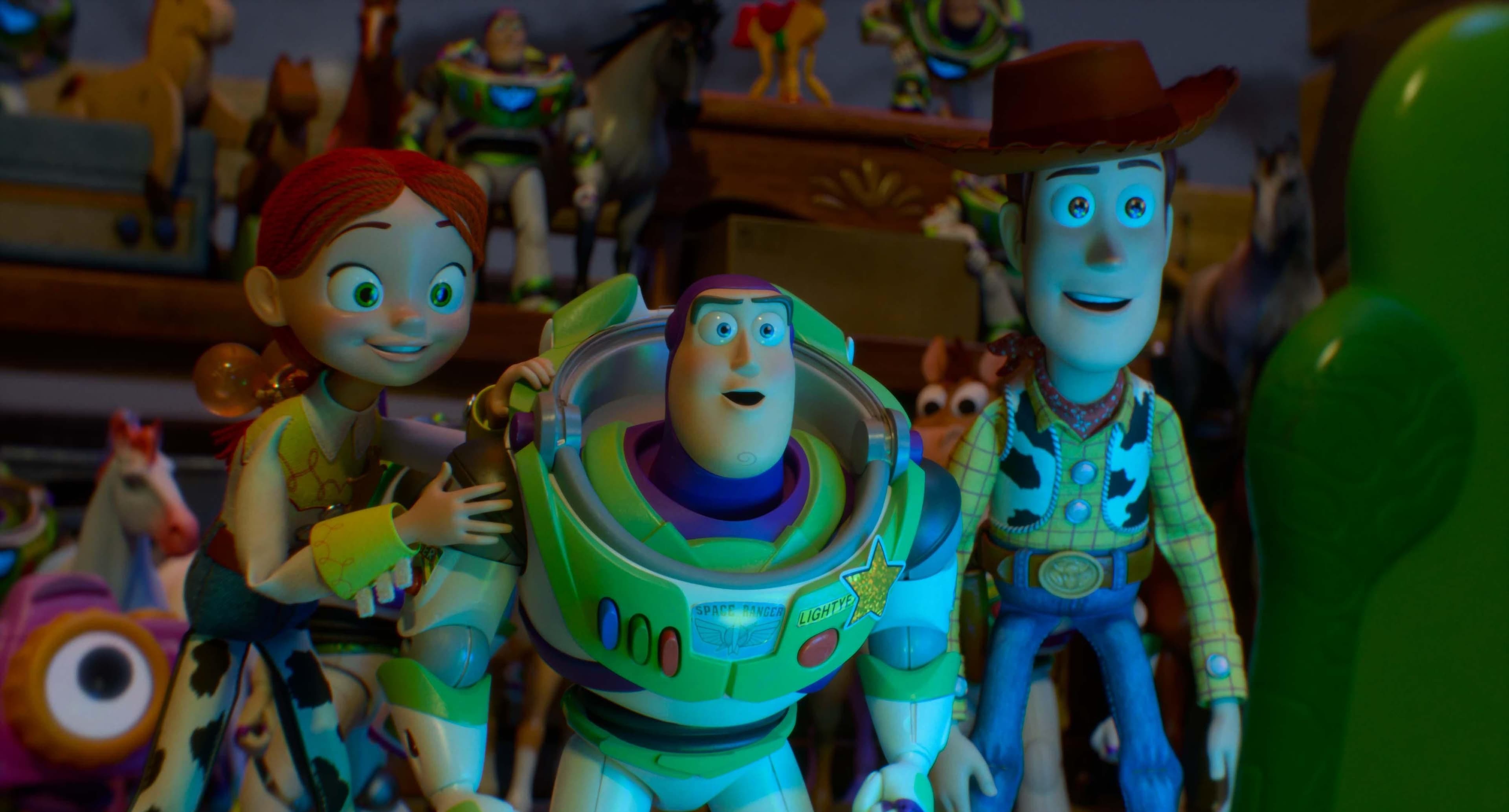
Let's start with the positives, because there are genuine ones worth celebrating. Toy Story 5 is, by almost every surface-level measure, a well-crafted animated film. The animation quality is predictably stunning — Pixar continues to push the boundaries of what computer-generated imagery can achieve, and every frame of this movie is rich with texture, light, and emotional detail. Woody's stitching looks lived-in. Buzz's plastic gleam feels nostalgic in a way that is almost tactile.
The film also carries a message that is undeniably relevant to the world we live in today. Without diving too deep into spoiler territory, the story grapples with themes of obsolescence, the anxiety of being replaced, and the challenge of finding purpose in a rapidly evolving world. These are themes that resonate not just with toys on a shelf, but with adults navigating career changes, aging parents watching their children grow up, and an entire generation of young people wondering where they fit in a world shaped by technology. In that sense, Pixar has once again done what it does best: smuggled genuinely mature emotional content into a story designed for all ages.
The humor lands more often than not. There are sequences that will have children laughing out loud and a few clever callbacks that longtime fans will deeply appreciate. The voice performances, as expected, carry warmth and familiarity that makes slipping back into this world feel comfortable and safe.
The Core Problem: Does Toy Story 5 Need to Exist?
Here is where the conversation gets more complicated, and honestly, more interesting. The central question hanging over Toy Story 5 is not whether it is a good movie — it largely is — but whether it is a necessary one. And that distinction matters enormously for a franchise with such a carefully constructed emotional legacy.
Toy Story 3 was widely regarded as a near-perfect conclusion. It sent Andy off to college and gave audiences a tearful, cathartic farewell that felt earned after fifteen years of storytelling. Then Toy Story 4 arrived, and while divisive, it managed to carve out a meaningful addendum by giving Woody his own individual arc separate from his identity as a child's toy. Both films justified their existence by genuinely evolving the characters and the thematic universe they inhabit.
Toy Story 5 struggles more visibly with this burden of justification. Its message, though meaningful, does not feel entirely new within the context of this franchise. The anxiety of obsolescence and the search for belonging have been explored, in various forms, across every single entry in the series. The film does not so much deepen these themes as it reframes them through a contemporary lens — which is admirable, but not quite the same thing as breaking new ground.
How Does It Compare to Previous Films in the Franchise?
Placing Toy Story 5 within the broader franchise ranking is a task that will spark debate among fans, but here is a reasonable assessment based on storytelling ambition, emotional impact, and narrative necessity.
- Toy Story (1995) remains untouchable. It invented the template and changed animation forever. No sequel can be held to that standard.
- Toy Story 2 (1999) is arguably the franchise's most underrated entry — a sequel that expanded the mythology in smart and surprising ways while deepening every character it touched.
- Toy Story 3 (2010) is the emotional pinnacle. It understood its audience had grown up and met them exactly where they were.
- Toy Story 4 (2019) divided fans but was more ambitious than it was given credit for, particularly in how it was willing to deconstruct Woody's identity.
- Toy Story 5 (2025) sits comfortably in fifth place — charming, visually spectacular, and thematically earnest, but the least narratively essential entry in the series.
Who Is Toy Story 5 Really For?
Perhaps the most useful way to evaluate Toy Story 5 is to ask who its ideal audience is. For young children encountering these characters for the first time, the film will be pure magic — funny, colorful, fast-paced, and emotionally accessible. For parents sitting beside them, it will be a pleasant, occasionally moving experience with enough wit to keep adults engaged. For the franchise faithful who grew up with the originals and regard the series as a benchmark of animated storytelling, it may feel like a slight step backward.
That does not make Toy Story 5 a failure. It is a well-made, thoughtful, and genuinely enjoyable film. But in a franchise that set an almost impossibly high bar for itself, "enjoyable" can feel like a quiet disappointment.
Final Verdict: Pixar Still Has the Touch, But the Story Needed More Courage
Pixar's ability to craft beautiful, emotionally resonant animation remains fully intact, and Toy Story 5 is proof that the studio can still produce work that is head and shoulders above most of what the broader animated landscape has to offer. The message is timely, the craft is impeccable, and the characters remain beloved for very good reasons.
But the best entries in this franchise were not just well-made — they were brave. They were willing to take emotional risks, challenge their characters in genuinely uncomfortable ways, and trust their audience to handle something complex. Toy Story 5 plays things a little too safely to reach those heights. It aims for the bullseye, hits the board, and in the end, that will be enough for most audiences — even if longtime fans know just how much higher the target can be reached.