
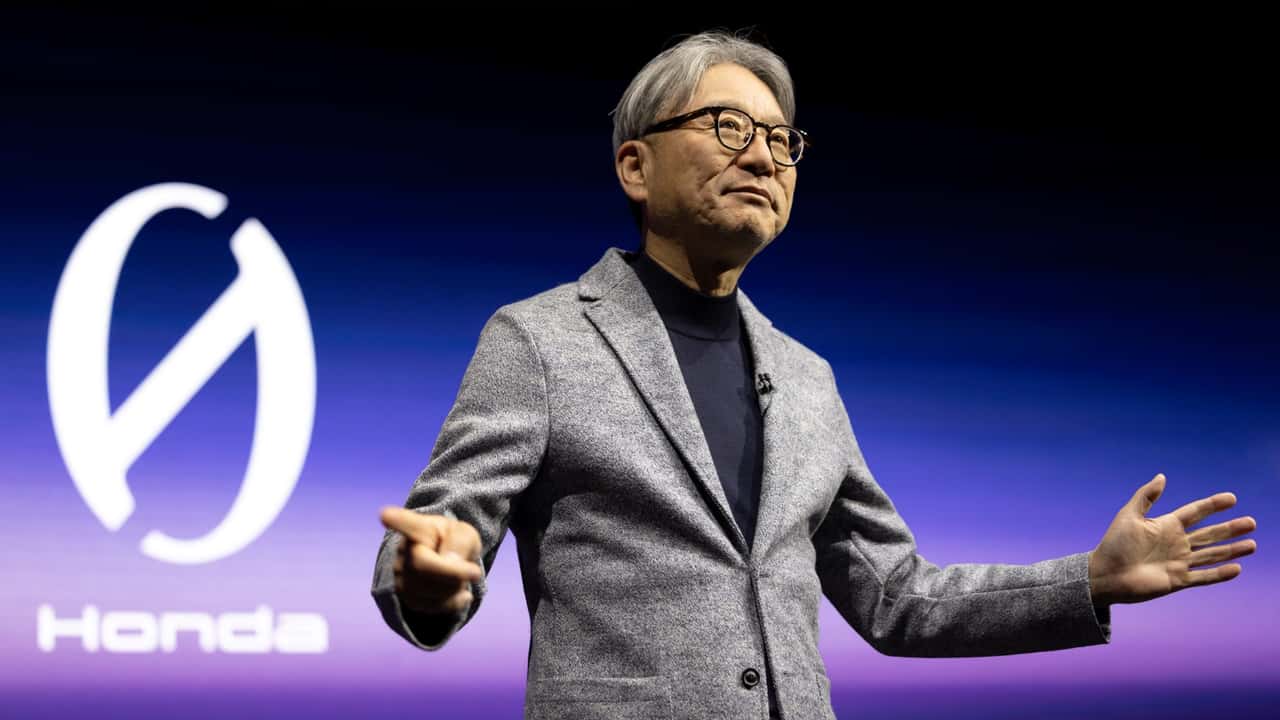
Honda's CEO Survived A Revolt After The Automaker's Worst Year In Decades
Honda Motor Company, one of the most storied names in the global automotive industry, found itself navigating treacherous internal waters after recording its first annual financial loss in nearly 70 years. The staggering results didn't just shake investor confidence — they reportedly triggered a behind-the-scenes revolt among former executives who had helped build the company into a global powerhouse. At the center of the storm stood CEO Toshihiro Mibe, who ultimately survived the challenge to his leadership but now faces the daunting task of steering Honda back toward profitability in an era defined by electric vehicles, shifting consumer behavior, and intensifying global competition.
Honda's Historic Financial Loss: What Happened?
For a company with nearly seven decades of profitability on its record, posting an annual net loss is more than a financial footnote — it's a symbolic earthquake. Honda's first annual loss in approximately 70 years sent shockwaves through the automotive world, raising urgent questions about the company's strategic direction, its ability to compete in the EV transition, and the effectiveness of its current leadership.
The loss came amid a confluence of pressures that have battered legacy automakers globally. Escalating costs associated with electric vehicle development, supply chain disruptions, currency fluctuations, and softening demand in key markets all contributed to the financial decline. Honda, like many of its peers, has been caught in an expensive transition — pouring capital into electrification while still managing the ongoing costs of its internal combustion engine business.
The numbers were stark enough to rattle confidence at the highest levels of the organization, not just among current employees but among the cadre of former executives who still maintain deep ties to the company's identity and culture.
The Revolt: Former Executives Push Back
According to reports, Honda's dismal financial results did not sit quietly with the company's elder statesmen. Former executives — individuals who had shaped Honda's global expansion and cemented its reputation for quality and reliability — were reportedly far from silent about their dissatisfaction. Sources indicated that these former leaders made their concerns known, creating a form of institutional pressure on the current leadership team that went beyond ordinary shareholder frustration.
This kind of internal revolt, particularly from retired executives, is relatively rare in Japanese corporate culture, where deference to sitting leadership is traditionally observed. The fact that it reportedly occurred at all speaks to just how alarming Honda's results appeared to those who once helmed the organization. In Japan's automotive sector, where corporate reputation carries enormous weight, a historic loss is not merely a business problem — it is a matter of institutional pride.
The revolt reportedly placed CEO Toshihiro Mibe under significant pressure, with questions swirling about whether his leadership and long-term strategy were the right fit for navigating Honda through one of the most complex periods in the company's history.
Who Is Toshihiro Mibe?
Toshihiro Mibe has been at the helm of Honda since April 2021, taking over with a mandate to accelerate the company's transition to electric vehicles. An engineer by background, Mibe was instrumental in developing Honda's hydrogen fuel cell technology before ascending to the CEO role. His vision for Honda has centered on an ambitious electrification roadmap, including plans to launch a series of EV models and invest heavily in battery technology partnerships.
His appointment was seen as a signal that Honda was serious about innovation and the EV future. However, the road from vision to execution has proven significantly more difficult than anticipated, and the financial results have put his strategy under a microscope.
How Mibe Survived the Challenge
Despite the reported pressure from former executives, Mibe retained his position. Surviving such a challenge in a major Japanese corporation is itself a notable outcome, and it suggests that Honda's board and key stakeholders ultimately backed his long-term vision over the demands of those calling for a change at the top.
Mibe's survival likely hinged on several factors. First, the board may have recognized that replacing a CEO mid-crisis often creates more instability than it resolves, particularly when the company is in the middle of a capital-intensive transformation. Second, Mibe's technical credibility and clear articulation of a future-focused strategy — centered on EVs, software-defined vehicles, and strategic alliances — likely persuaded decision-makers that his roadmap remains the most viable path forward.
Honda has also been pursuing a high-profile merger discussion with Nissan, a move that underscores just how seriously management is taking the need for scale in the modern auto industry. Any leadership upheaval could have complicated or derailed those sensitive negotiations.
What This Means for Honda's Future
The episode highlights the broader pressures facing traditional automakers as the industry undergoes its most radical transformation in over a century. Honda must simultaneously manage declining returns on its legacy ICE business, accelerate EV investment, and compete with increasingly capable Chinese manufacturers who are entering global markets with aggressive pricing and technology.
- EV investment pressure: Honda has committed billions to electric vehicle development, but monetizing those investments remains years away for most models.
- Global competition: Chinese automakers such as BYD and NIO are encroaching on markets where Honda has historically been dominant, particularly in Asia.
- Alliance strategy: Partnerships and potential mergers, including the discussed tie-up with Nissan, may be critical to achieving the scale necessary to compete long-term.
- Cultural challenges: The internal revolt underscores the difficulty of driving transformational change inside organizations with deep cultural traditions and strong institutional memory.
A Defining Moment for Honda and Its Leadership
Honda's ability to rebound from its worst financial year in nearly seven decades will depend not only on market conditions but on whether its leadership can execute a coherent, credible turnaround strategy. Toshihiro Mibe has bought himself time by surviving the internal revolt, but the pressure on him — and on Honda as an institution — has never been greater.
For investors, industry watchers, and the millions of customers who have trusted Honda vehicles for generations, the next two to three years will be critical. The company that gave the world the Civic, the Accord, and the CR-V has both the heritage and the engineering talent to compete in the next era of mobility. Whether its leadership can translate that potential into results is the central question now defining Honda's story.
One thing is certain: Honda's CEO surviving a revolt may be a short-term win, but the real test lies ahead — on the factory floor, in the EV market, and in the boardrooms where the future of this iconic automaker will ultimately be decided.