
visionOS 27 Is About to Change How You Interact With Apple Vision Pro
When Apple Vision Pro launched, Apple made it abundantly clear that hand and eye tracking were the crown jewels of the experience. There were no controllers to speak of, no physical accessories to hold, and almost no haptic feedback to ground users in the virtual world they were inhabiting. It was a bold, minimalist vision — but as time has passed, both Apple and its developer community have come to recognize the limitations of that approach. With visionOS 27, Apple is now pushing the boundaries of what is physically possible with the headset, introducing expanded support for spatial accessories and bringing genuine physical object tracking to the platform for the very first time.
A Brief History: From Hand Tracking Purism to Physical Accessories
Apple's original philosophy for Vision Pro was rooted in the idea that your hands themselves were the best possible input device. The company invested heavily in camera-based hand tracking and sophisticated eye-gaze detection, allowing users to select, scroll, and interact simply by looking and pinching. It was elegant, futuristic, and genuinely impressive — but it also meant that users had no tactile feedback, no sense of weight or resistance when picking up a virtual object, and no physical anchor to the digital environments they were exploring.
This became especially apparent in gaming. While PlayStation's DualSense controller was supported for playing 2D iPad-style games through the headset, Apple had no native answer for users who wanted a more immersive, controller-driven gaming experience within visionOS itself. Developers building spatial games were working with one hand tied behind their backs — quite literally.
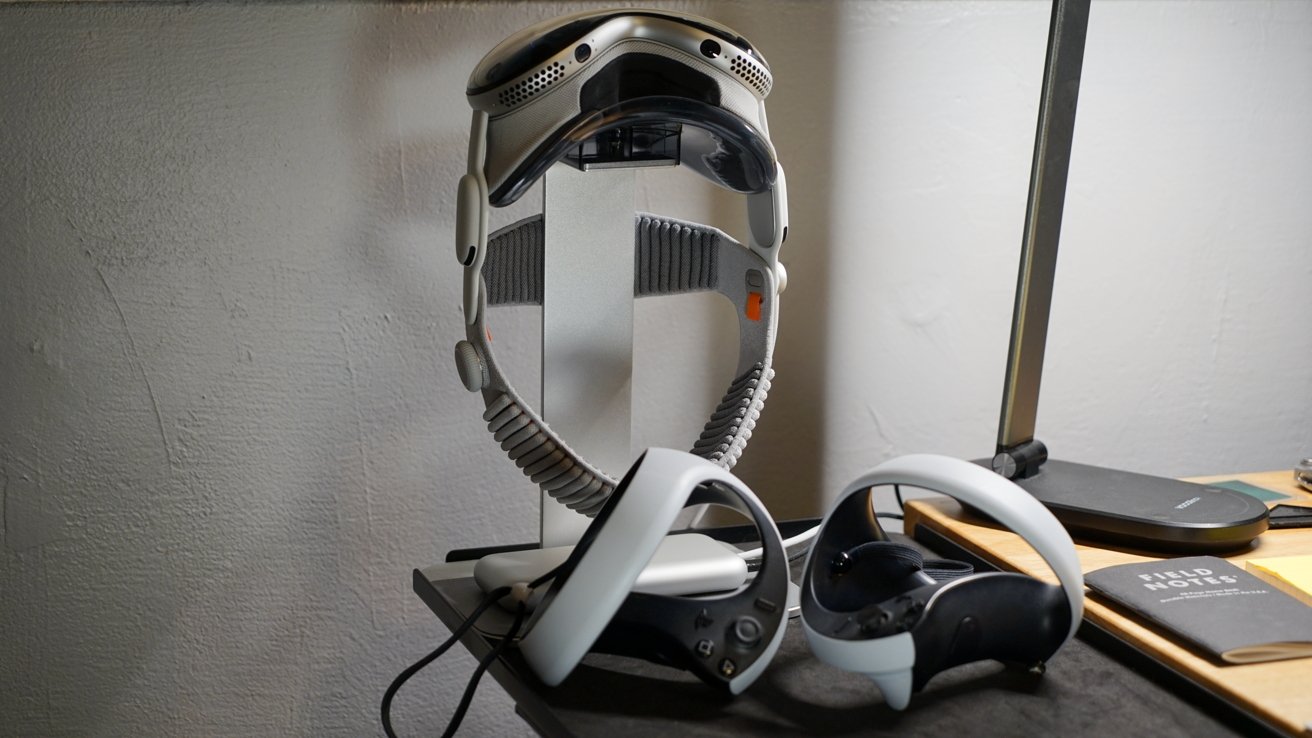
That began to change with visionOS 26, which introduced the concept of spatial accessories. Most notably, this update brought support for PlayStation's PSVR2 Sense controllers, giving Apple Vision Pro users a way to hold physical objects and receive haptic feedback for the first time. It was a significant step, but it was only the beginning.
What visionOS 27 Adds: Physical Object Tracking and Expanded Spatial Accessories
With visionOS 27, Apple is taking spatial accessory support to an entirely new level. The update introduces two major enhancements that together represent a fundamental shift in how the headset can be used.
Physical Object Tracking
For the first time, visionOS 27 allows developers to implement physical object tracking within their apps and experiences. This means that real-world objects — not just purpose-built controllers — can be recognized and tracked by Apple Vision Pro as you use them. Imagine picking up a toy lightsaber, a tennis racket, or even a custom-designed peripheral, and having the headset accurately map its position and movement in real time within a virtual environment. The implications for gaming, training simulations, creative tools, and educational applications are enormous.
Physical object tracking essentially bridges the gap between the physical and digital worlds in a way that hand tracking alone never could. It allows developers to design experiences around objects that users already own or that can be produced cheaply and independently, without requiring highly specialized hardware. This democratizes the accessory ecosystem and opens the door to a much broader range of spatial applications.
Expanded Spatial Accessory Support
Beyond object tracking, visionOS 27 also expands the framework for spatial accessories more broadly. Developers will have access to richer APIs that allow them to build fully realized controllers and input devices specifically designed for visionOS. Where visionOS 26 laid the groundwork with initial support for third-party spatial accessories like the PSVR2 Sense controllers, visionOS 27 formalizes and deepens that infrastructure, making it easier for hardware makers to build accessories that integrate tightly and reliably with the platform.
This is a crucial signal to the wider hardware ecosystem. By investing in and expanding this framework, Apple is effectively sending an open invitation to peripheral manufacturers: build for Vision Pro, and the platform will support you properly. That kind of developer and manufacturer confidence is what drives accessory ecosystems to flourish.
Why This Matters for Apple Vision Pro Users
The practical benefits of these changes for everyday Apple Vision Pro users are significant and wide-ranging.
- Richer gaming experiences: Games built around physical controllers and tracked objects will feel far more immersive and responsive, closing the gap between Vision Pro gaming and dedicated VR platforms like the Meta Quest or PlayStation VR2.
- Better haptic feedback: Physical accessories mean physical feedback — users will be able to feel resistance, vibration, and tactile cues that purely gesture-based interaction simply cannot provide.
- More diverse app categories: Object tracking opens up entirely new genres of applications, from fitness and sports training to music creation, art tools, and professional simulations.
- A growing accessory market: As Apple deepens its spatial accessory framework, third-party manufacturers will have greater incentive to develop Vision Pro-compatible products, which ultimately means more choice and innovation for users.
Apple's Evolving Vision for Spatial Computing
What the progression from visionOS 26 to visionOS 27 reveals is that Apple is learning, adapting, and responding to real-world feedback about how people actually want to use Apple Vision Pro. The initial insistence on pure hand and eye tracking was visionary in some respects, but it also created friction — especially for gaming and creative use cases where physical tools matter deeply.
By embracing physical object tracking and expanding spatial accessory support, Apple is acknowledging that the best spatial computing experiences are ones that blend the digital and physical seamlessly, rather than replacing one with the other entirely. visionOS 27 represents a more mature, more pragmatic, and ultimately more exciting vision for what Apple Vision Pro can become.
What to Expect When visionOS 27 Launches
When visionOS 27 officially launches, users can expect a wave of updated and newly developed applications that take advantage of these capabilities. Developers who have been waiting for a more robust physical interaction framework will have the tools they need to build the kinds of experiences that were previously out of reach. Early adopters of Apple Vision Pro who may have felt that the headset's full potential was still unrealized will find fresh reasons to strap on the device and dive back in.
Whether you are a gamer looking for a more tactile experience, a creative professional exploring spatial tools, or simply someone who wants to get more out of their Apple Vision Pro investment, visionOS 27 is shaping up to be one of the most impactful updates the platform has seen since its launch. Keep your eyes on Apple's announcements as the release date approaches — the future of spatial computing just got a lot more physical.