
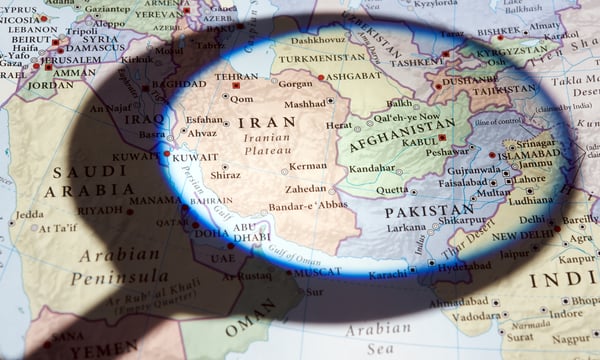
Pakistan Emerges as a Critical Trade Corridor Amid West Asia Turmoil
The ongoing crisis rippling across West Asia is doing more than reshaping geopolitical alliances — it is fundamentally redrawing the map of regional trade. As traditional shipping lanes face disruption and instability continues to rattle key chokepoints, Pakistan has stepped into an increasingly vital role as a land bridge connecting South Asia with Iran, Central Asia, and beyond. Cargo-laden trucks are already plying six new overland routes linking Pakistan's major ports to the Iranian border, signaling a structural shift in how goods move across this vast and strategically significant region.
For logistics planners, policymakers, and businesses watching regional supply chains, this development is far more than a short-term workaround. It represents a durable reconfiguration of trade geography — one that could redefine Pakistan's economic fortunes for decades to come.
Six New Overland Routes: What They Mean for Regional Connectivity
The activation of six new overland trade routes is the most tangible evidence that Pakistan is capitalizing on the disruptions caused by the West Asia crisis. These corridors stretch from the country's major commercial ports — primarily Karachi and Gwadar — northward and westward toward border crossings into Iran, and then onward into the landlocked republics of Central Asia.
This matters enormously for a region that has long struggled with fragmented connectivity. Central Asian nations such as Uzbekistan, Kazakhstan, Tajikistan, Turkmenistan, and Kyrgyzstan are resource-rich but geographically isolated from global sea routes. Pakistan, particularly through the deep-sea port of Gwadar developed under the China-Pakistan Economic Corridor (CPEC), offers these nations a comparatively short and commercially attractive path to the Arabian Sea and international markets.
With traditional routes through Russia and Western supply chains disrupted by sanctions and conflict, Central Asian exporters and importers are actively seeking alternatives. Pakistan is positioning itself as precisely that alternative.
The West Asia Crisis as a Catalyst for Trade Realignment
Crises, while destructive in their immediate impact, have historically acted as accelerants for structural economic change. The current West Asia crisis — encompassing armed conflict, sanctions regimes, and the disruption of maritime routes including the Red Sea corridor — has pushed shippers, freight forwarders, and national governments to reconsider their logistical dependencies.
The Red Sea disruptions alone have added weeks and millions of dollars in costs to shipping routes that previously relied on the Suez Canal pathway. Companies sourcing goods from Asia for European and Middle Eastern markets have been forced to reroute cargo, and overland corridors have suddenly become far more competitive on a cost-adjusted basis.
For Pakistan, this confluence of disruptions arrives at a moment when the country has been actively developing the infrastructure necessary to serve as a transit hub. Roads, dry ports, customs frameworks, and bilateral trade agreements have been in various stages of development for years. The current crisis has compressed the timeline for their practical adoption.
Pakistan's Strategic Position at the Heart of Eurasian Trade
Geography has always placed Pakistan at a uniquely advantageous intersection. The country borders China to the northeast, India to the east, Afghanistan to the northwest, and Iran to the west. Its Arabian Sea coastline provides direct maritime access to Gulf states, Africa, and East Asia. This positioning, long recognized but historically underutilized due to political instability and infrastructure gaps, is now drawing fresh attention from regional trade partners.
The Iran connection is particularly significant. Despite Western sanctions constraining Iran's access to global financial systems, overland trade between Pakistan and Iran has continued and is now expanding under the pressure of necessity. Goods flowing through Iranian territory provide Pakistani traders and Central Asian buyers with a continuous land corridor stretching from the Arabian Sea to the Caspian region and deeper into Eurasia.
The Shanghai Cooperation Organisation (SCO), of which Pakistan is a member, provides an additional diplomatic framework supporting this kind of multilateral trade integration. Regional consensus around connectivity is growing, even as bilateral tensions elsewhere persist.
Challenges That Must Be Addressed to Sustain Momentum
The opportunity is real, but so are the obstacles. Pakistan's overland trade ambitions will only be durable if several structural challenges are systematically addressed.
- Customs and border management: Lengthy processing times and bureaucratic inefficiencies at border crossings remain a persistent bottleneck. Streamlined procedures and digitized documentation are essential for keeping freight competitive with maritime alternatives.
- Infrastructure quality: While CPEC has brought significant road and port investment, many routes linking interior Pakistan to border crossings require further upgrading to handle heavy commercial freight at scale.
- Security conditions: Certain corridors, particularly those passing through or near conflict-affected areas of Balochistan and the Afghan border region, require sustained security oversight to give freight operators the confidence necessary for long-term investment.
- Financial and banking connectivity: Trade settlement mechanisms with Iran and certain Central Asian partners remain complicated by sanctions and underdeveloped correspondent banking relationships.
Addressing these challenges is not simply a matter of national infrastructure policy — it requires coordinated diplomacy, regional institution-building, and sustained investment from both the public and private sectors.
The Gwadar Factor: A Port Whose Moment May Have Arrived
No discussion of Pakistan's trade corridor ambitions is complete without focusing on Gwadar. Long described as a future game-changer, the deep-sea port on the Balochistan coast is increasingly being viewed through a more immediate strategic lens. As a terminus for CPEC and a natural gateway for Central Asian landlocked states seeking sea access, Gwadar's operational ramp-up is directly tied to the success of the overland routes now being activated.
Increased freight volumes, growing interest from Central Asian governments, and the broader realignment of West Asian trade flows are all converging to give Gwadar a relevance it has long been promised but rarely achieved. If the current momentum is maintained and infrastructure and security investments follow through, this could mark a genuine inflection point for the port and for Pakistan's transit economy.
A Turning Point for Pakistan's Economic Strategy
Pakistan has spent years articulating a vision of itself as a regional trade and transit hub. That vision has often struggled to move from strategy documents into operational reality. The West Asia crisis, for all its tragic human costs, may be providing the external pressure needed to accelerate what domestic policy alone could not.
Six new overland routes are not just logistics lines on a map — they are early indicators of a broader realignment that could reposition Pakistan as an indispensable node in the Eurasian trade network. How effectively the country converts this moment of disruption into durable economic advantage will depend on the quality of its institutions, the reliability of its infrastructure, and the consistency of its trade diplomacy. The trucks are already moving. The question now is whether Pakistan can build the systems to keep them moving at scale.