
Why Don't Rockets Fly Straight Up Into Space?
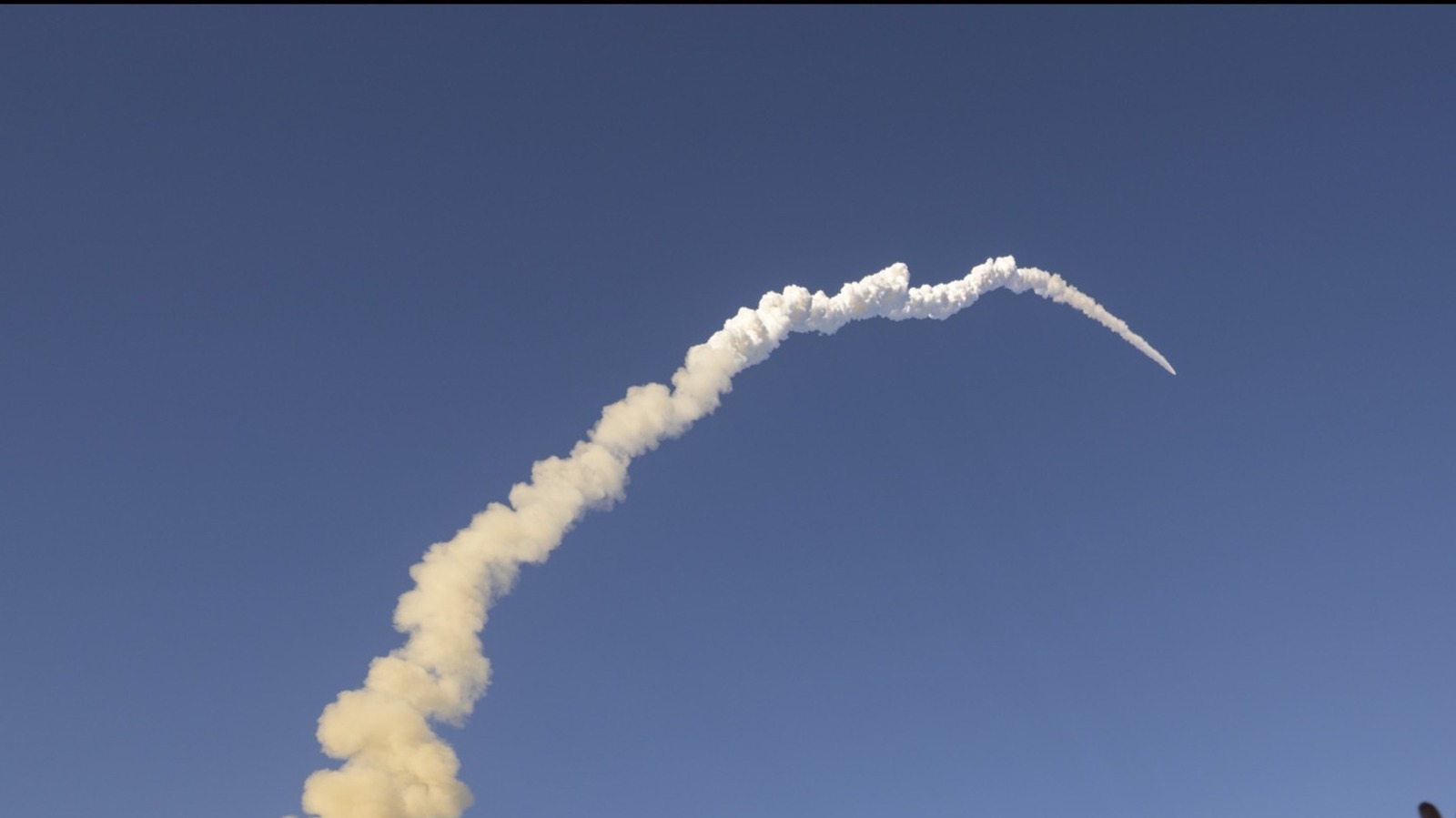
If you've ever watched a rocket launch — whether live from a Florida coastline or through a livestream — you've probably noticed something surprising. The rocket doesn't just blast straight up and disappear into the heavens like a bullet fired into the sky. Instead, it arcs gracefully to one side, tracing a curved, banana-shaped path across the atmosphere before eventually vanishing from view. For first-time observers, this can seem counterintuitive. Isn't up the most direct route to space? As it turns out, "up" is almost never where rockets are really trying to go — and the physics behind this elegant curve is one of the most fascinating stories in aerospace engineering.
The Real Goal of a Rocket Launch Isn't Just Altitude
Here's the key insight that changes everything: getting to space isn't primarily about going high. It's about going fast — specifically, fast enough sideways to continuously "fall around" the Earth rather than fall back down to it. This is what it means to be in orbit. The International Space Station, for example, orbits at roughly 17,500 miles per hour (about 28,000 km/h) horizontally. If it slowed down, it would simply fall back toward Earth. Height alone isn't enough to stay in space; you need to achieve orbital velocity.
This means that from the very first seconds of a launch, a rocket's mission control and guidance computers are already planning to tip the vehicle sideways and start building that enormous horizontal speed. The curved, banana-shaped trajectory you see from the ground is a direct visual consequence of that plan in action.
What Is a Gravity Turn and Why Do Rockets Use It?
The specific maneuver responsible for the banana-shaped arc is called a gravity turn, and it's as clever as it is elegant. Here's how it works:
- Shortly after liftoff, once the rocket has cleared the launch tower and is moving fast enough to have aerodynamic control, the vehicle executes a small deliberate tilt — usually just a few degrees — in the direction of its intended orbit.
- Once that initial tilt is established, the rocket essentially lets gravity do the rest of the curving. As gravity pulls the rocket slightly downward, the flight path bends. The rocket's engines, however, keep firing along the direction the nose is pointing, which has now shifted away from perfectly vertical.
- The result is a smooth, continuous curve that gradually transitions from mostly vertical (getting out of the dense lower atmosphere quickly) to mostly horizontal (building orbital velocity).
One of the greatest advantages of the gravity turn is fuel efficiency. Rather than using rocket engine thrust to forcibly pitch the vehicle over — which would waste precious propellant — engineers let gravity's natural pull do the work of rotating the trajectory. Fuel saved during ascent is fuel that can be used to reach a higher orbit or carry a heavier payload.
The Role of Earth's Atmosphere in Shaping the Curve
Earth's atmosphere plays a crucial role in dictating the early shape of a rocket's flight path. During the first 60 to 80 seconds of flight, a rocket is travelling through the thickest, most drag-heavy portion of the atmosphere. Flying at an angle during this phase would subject the vehicle to enormous sideways aerodynamic forces — called aerodynamic loading or "Max Q" stress — that could tear it apart.
This is why rockets initially launch nearly straight up. The vertical climb isn't about reaching space directly; it's about getting through the densest part of the atmosphere as quickly and efficiently as possible. Once the vehicle punches through that thick air and reaches thinner altitudes, it becomes safe to begin tipping over aggressively and building horizontal speed without risking structural failure.
The point of maximum aerodynamic pressure — known as Max Q — is one of the most closely monitored milestones of any launch. You'll often hear launch commentators call it out during broadcasts. Past Max Q, the curve of the trajectory steepens noticeably as the rocket begins its more aggressive lean toward the horizon.
Orbital Mechanics: The Bigger Picture Behind the Curve
To fully appreciate why rocket trajectories look the way they do, it helps to understand a bit of orbital mechanics. An orbit is essentially a continuous state of freefall. The Moon isn't hovering above Earth — it's falling toward Earth constantly, but moving sideways so fast that the planet's surface curves away beneath it at the same rate it falls. Satellites and spacecraft do the same thing.
To place a payload into this perpetual freefall, a rocket must deliver it to the right altitude and simultaneously accelerate it to the right horizontal velocity. The curved ascent profile is the most fuel-efficient way to accomplish both objectives within a single, continuous burn sequence. Firing the engines straight up and then separately firing sideways would require carrying much more propellant — and in rocketry, every extra kilogram of fuel requires even more fuel to lift it, a compounding problem known as the Tsiolkovsky rocket equation.
Why the Direction of the Curve Matters
You might also notice that rockets always curve in a consistent direction rather than tipping randomly to any side. This is intentional. The direction of the curve corresponds to the orbital inclination the mission requires. Launches from Cape Canaveral in Florida typically arc southeast or northeast depending on the target orbit, while launches from Vandenberg Space Force Base in California often arc southward for polar orbits.
Additionally, launch teams often take advantage of Earth's own rotation to give rockets a free speed boost. Earth's surface at the equator moves eastward at about 1,000 miles per hour, and by launching in that direction, rockets can inherit some of that velocity for free — reducing the work the engines must do to reach orbital speed.
A Beautiful Intersection of Physics and Engineering
The next time you watch a rocket launch and see that graceful, curving arc trace itself across the sky, you'll know you're not watching a flight gone sideways — you're watching one of humanity's most sophisticated engineering achievements executing a near-perfect ballet of physics. The banana-shaped trajectory is the product of atmospheric pressure management, gravitational mechanics, fuel optimization, and precise orbital targeting all working in harmony. It isn't an accident or a compromise. It's the optimal solution — and that's what makes it so beautiful.